

Product guide · Restricted substance
E.T. Labz Black Ice 45 caps
Stimulant formula from E.T. Labz, 45 capsules. This guide sets out what the manufacturer states about the composition of E.T. Labz Black Ice 45 caps, what independent research says about its main ingredients, and the safety and regulatory points that apply. It contains substances that are not authorised as food or medicine in the EU. This guide is educational: it does not recommend use and gives no directions for use.
Back to the product- Named ingredients
- 11
- Amounts stated
- All
- Status
- Restricted substance
- Evidence summaries
- 9
Overview
Manufacturer informationIngredients & composition
Manufacturer information| Ingredient | Amount |
|---|---|
| Caffeine | 300 mg |
| Black ice stim blend | 665 mg |
| 1,3-DMBA (AMP citrate) | in the blend |
| Guarana seed extract | in the blend |
| Eria jarensis | in the blend |
| Choline citrate | in the blend |
| Noopept | in the blend |
| Vinpocetine | in the blend |
| Piperine | in the blend |
| Alpha-yohimbine HCl | in the blend |
| Huperzine A | in the blend |
Not covered in detail in this guide: Black ice stim blend.
Scientific background
Independent researchCaffeine
Caffeine is a stimulant that blocks adenosine receptors in the brain, reducing perceived effort and fatigue. It is found in coffee, tea and energy drinks and is a common ingredient in pre-workout products2.
Dicaffeine malate (sold as Infinergy®) is caffeine bonded to malic acid. Its caffeine adds to the total caffeine in a product, but labels do not always state the caffeine equivalent.
DMHA (2-aminoisoheptane, octodrine) and DMBA
DMHA, also labelled 2-aminoisoheptane or octodrine (2-amino-6-methylheptane), is a synthetic aliphatic amine stimulant found in pre-workout and weight-loss supplements, sometimes alongside the related compound DMBA3.
Phenylethylamine (PEA) and Eria jarensis
β-Phenylethylamine (PEA) is a naturally occurring trace amine with stimulant properties. "Eria jarensis" extract is marketed as a source of related phenethylamines such as N-phenethyldimethylamine. These compounds belong to a large chemical family that also includes synthetic stimulants found in supplements4.
Choline (choline bitartrate, alpha-GPC)
Choline is an essential nutrient used to make cell membranes and the neurotransmitter acetylcholine. EFSA set an adequate intake of 400 mg a day for adults5. Supplements supply it as choline bitartrate, alpha-GPC or citicoline.
Noopept (omberacetam)
Noopept (N-phenylacetyl-L-prolylglycine ethyl ester, omberacetam) is a synthetic compound described as an active pharmaceutical ingredient with nootropic activity6.
Vinpocetine
Vinpocetine is a semi-synthetic derivative of the periwinkle alkaloid vincamine, sold as a medicine in some countries for cerebrovascular disorders7.
Piperine (black pepper extract, BioPerine®)
Piperine is the pungent alkaloid of black pepper, added to supplements as a "bioavailability enhancer".
Yohimbine (yohimbe bark, rauwolscine)
Yohimbine is an alkaloid from the bark of the African tree Pausinystalia yohimbe. It blocks α2-adrenergic receptors, which increases noradrenaline release. Rauwolscine (alpha-yohimbine) is a closely related alkaloid.
Huperzine A
Huperzine A is an alkaloid from the club moss Huperzia serrata. It inhibits acetylcholinesterase, the enzyme that breaks down the neurotransmitter acetylcholine, and it has been used as a medicine for dementia in China8.
Research evidence
Independent researchCaffeine
The International Society of Sports Nutrition concludes that caffeine consistently improves exercise performance when consumed in doses of about 3–6 mg per kg of body mass, with benefits for muscular endurance, movement velocity, strength, sprinting, jumping and aerobic exercise2.
DMHA (2-aminoisoheptane, octodrine) and DMBA
There are no controlled human trials showing that DMHA improves exercise performance or weight loss.
Phenylethylamine (PEA) and Eria jarensis
There are no controlled human trials showing that PEA or Eria jarensis extracts improve exercise performance or focus. Most published research concerns detection of phenethylamines in supplements and their regulatory status49.
Choline (choline bitartrate, alpha-GPC)
The EU authorises claims that choline contributes to normal lipid metabolism, homocysteine metabolism and liver function for foods that are a source of choline10. Claims that choline improves focus or exercise performance are not authorised.
Noopept (omberacetam)
There are no robust controlled trials in healthy people showing improved memory or focus. Published research is mainly chemical, animal or from limited clinical settings6.
Vinpocetine
Reviews describe neuroprotective mechanisms and use after ischaemic brain injury; the review cited was written by employees of a vinpocetine manufacturer7. There is no good evidence of cognitive benefits in healthy people.
Piperine (black pepper extract, BioPerine®)
A 2026 review of 22 human pharmacokinetic studies found that reports of enhanced nutrient absorption come mainly from manufacturer-affiliated studies, and that independent trials did not confirm enhancement for curcumin or resveratrol at supplement doses11.
Yohimbine (yohimbe bark, rauwolscine)
A small trial in professional soccer players found reduced body fat with yohimbine but no change in body mass, muscle mass or performance12. Larger, independent trials are lacking.
Huperzine A
A Cochrane review found some benefit on cognitive function in people with Alzheimer's disease, but only one study was of adequate quality and size, so there was inadequate evidence to recommend its use8. A Cochrane review in mild cognitive impairment found the evidence insufficient13.
There is no good evidence that huperzine A improves focus or performance in healthy people.
Evidence limitations
Independent researchThe studies summarised in this guide examined single ingredients. No published study has tested this product or this combination of ingredients.
Caffeine
Responses vary widely between people, partly because of genetics and habitual caffeine use. Many studies use pure caffeine, so results do not automatically apply to multi-ingredient products2.
DMHA (2-aminoisoheptane, octodrine) and DMBA
The research concerns detection of these stimulants in supplements, not their effects. Analyses of sports and weight-loss supplements have repeatedly found stimulants that were not declared, or quantities different from the label39.
Phenylethylamine (PEA) and Eria jarensis
Product labels for phenethylamine ingredients are often unreliable. Supplements labelled as containing Eria jarensis that were tested were inaccurately labelled and contained high quantities of caffeine and undeclared stimulants144.
Choline (choline bitartrate, alpha-GPC)
Evidence on cognitive or performance effects in healthy adults is limited.
Noopept (omberacetam)
Evidence in humans is very limited.
Vinpocetine
Independent, high-quality trials are lacking.
Piperine (black pepper extract, BioPerine®)
Piperine raises blood levels of other compounds mainly by inhibiting drug-metabolising enzymes (CYP3A4, CYP2C9) and P-glycoprotein, not by improving absorption11.
Yohimbine (yohimbe bark, rauwolscine)
Evidence for fat loss or performance is limited to small studies. Supplement labels are often inaccurate: of 49 US yohimbine supplements tested, only 2 gave accurate information on both the quantity and the known adverse effects15.
Safety & potential risks
For this product
The manufacturer states 300 mg of caffeine (as stated). That is more than the 200 mg single dose that EFSA considers safe for healthy adults1. Avoid other caffeine sources and do not exceed the label serving.
Caffeine
EFSA concluded that single doses of up to 200 mg, and daily intakes of up to 400 mg from all sources, do not raise safety concerns for healthy adults. For pregnant and breastfeeding women, daily intakes up to 200 mg do not raise concerns for the foetus or infant1.
Higher intakes can cause anxiety, sleep disturbance, raised heart rate and blood pressure, and digestive upset. Combining several caffeine sources (coffee, energy drinks, pre-workouts) raises total intake12.
DMHA (2-aminoisoheptane, octodrine) and DMBA
Human safety data are lacking. As a sympathomimetic amine, DMHA may raise heart rate and blood pressure; avoid combining it with other stimulants. Contaminated supplements have caused positive doping tests9.
Phenylethylamine (PEA) and Eria jarensis
Stimulants of this family can raise heart rate and blood pressure. A case report linked a supplement containing the related compound β-methylphenylethylamine to a haemorrhagic stroke during exercise16. Avoid combining with other stimulants, MAO inhibitors or antidepressants.
Choline (choline bitartrate, alpha-GPC)
High intakes can cause a fishy body odour, sweating and digestive upset.
Noopept (omberacetam)
Human safety data are limited. Official medicines control laboratories in Europe and Australia have found illicit "smart drugs" sold as nootropic products and warn of their dangers17.
Vinpocetine
Vinpocetine may lower blood pressure and add to the effect of blood thinners; it should not be used in pregnancy.
Piperine (black pepper extract, BioPerine®)
Because it inhibits drug-metabolising enzymes, piperine can raise blood levels of prescription medicines, including drugs with a narrow therapeutic index. People taking medication should ask a pharmacist first11.
Yohimbine (yohimbe bark, rauwolscine)
A review of poison-centre cases found that adverse events with yohimbine products had more serious outcomes than average exposures, including rapid heart rate, anxiety, high blood pressure and agitation18. People with heart conditions, high blood pressure, anxiety disorders or taking antidepressants should not use yohimbine.
Huperzine A
As an acetylcholinesterase inhibitor, huperzine A can cause nausea, diarrhoea, sweating and a slow heart rate, and it may interact with medicines that affect acetylcholine or heart rate. Anyone taking medication or with heart, lung or digestive conditions should ask a doctor first.
Regulatory status
Contains a synthetic research compound that is not authorised as food (novel food) or as a medicinal product in the EU. Contains DMHA/DMBA, a synthetic stimulant that is not authorised as a novel food in the EU. Contains yohimbine. Isolated yohimbine is classified as a medicinal substance in several EU member states; its legal status depends on the country of sale. No dosing information for human use is provided.
Caffeine
Caffeine is permitted in EU foods and food supplements, subject to labelling rules. It is not on the World Anti-Doping Agency Prohibited List19.
DMHA (2-aminoisoheptane, octodrine) and DMBA
DMHA and DMBA are not authorised as novel foods in the EU20. Octodrine and related stimulants are prohibited in competition by the World Anti-Doping Agency919.
Phenylethylamine (PEA) and Eria jarensis
Phenethylamine stimulants are not authorised EU food supplement ingredients, and several related compounds are on the World Anti-Doping Agency Prohibited List as stimulants1920.
Choline (choline bitartrate, alpha-GPC)
Choline is a permitted nutrient source in EU food supplements2110.
Noopept (omberacetam)
Noopept is not authorised as a food or food supplement ingredient in the EU20. Substances with a pharmacological action on the nervous system are regulated as medicinal products in the EU, and Noopept is not an authorised medicine22.
Vinpocetine
Vinpocetine is a medicinal substance in several EU Member States and is not permitted in food supplements there22.
Piperine (black pepper extract, BioPerine®)
No health claim for this ingredient is authorised in the EU10; botanical ingredients are sold under national food-supplement rules21.
Scientific references
- EFSA Panel on Dietetic Products, Nutrition and Allergies. Scientific Opinion on the safety of caffeine. EFSA Journal. 2015;13(5):4102. DOI 10.2903/j.efsa.2015.4102
- Guest NS, VanDusseldorp TA, Nelson MT, et al. International Society of Sports Nutrition position stand: caffeine and exercise performance. J Int Soc Sports Nutr. 2021;18:1. PubMed 33388079
- Cohen PA, Travis JC, Keizers PHJ, et al. Four experimental stimulants found in sports and weight loss supplements: 2-amino-6-methylheptane (octodrine), 1,4-dimethylamylamine (1,4-DMAA), 1,3-dimethylamylamine (1,3-DMAA) and 1,3-dimethylbutylamine (1,3-DMBA). Clin Toxicol (Phila). 2018;56:421-426. PubMed 29115866
- Pawar RS, Grundel E. Overview of regulation of dietary supplements in the USA and issues of adulteration with phenethylamines (PEAs). Drug Test Anal. 2017;9:500-517. PubMed 27259162
- EFSA Panel on Dietetic Products, Nutrition and Allergies. Dietary Reference Values for choline. EFSA Journal. 2016;14(8):4484. DOI 10.2903/j.efsa.2016.4484
- Araj SK, Szeleszczuk Ł, Gubica T, et al. Physicochemical and structural analysis of N-phenylacetyl-L-prolylglycine ethyl ester (Noopept): an active pharmaceutical ingredient with nootropic activity. J Pharm Biomed Anal. 2025;252:116474. PubMed 39298839
- Vizi ES, Kiss B. Vinpocetine: an 'old' drug with a new face: moving toward a better understanding of its neuroprotective mechanism of action. Biomolecules. 2026;16:454. PubMed 41897389
- Li J, Wu HM, Zhou RL, et al. Huperzine A for Alzheimer's disease. Cochrane Database Syst Rev. 2008;(2):CD005592. PubMed 18425924
- Cohen PA, Travis JC, Vanhee C, et al. Nine prohibited stimulants found in sports and weight loss supplements. Clin Toxicol (Phila). 2021;59:975-981. PubMed 33755516
- Commission Regulation (EU) No 432/2012 establishing a list of permitted health claims made on foods. Official Journal of the European Union. Source
- Kaneko M. Enhancement without a rationale? Black pepper extract (piperine) in dietary supplements and the future of formulation: a perspective from Japan. Front Nutr. 2026;13:1981406. PubMed 42964084
- Ostojic SM. Yohimbine: the effects on body composition and exercise performance in soccer players. Res Sports Med. 2006;14:289-299. PubMed 17214405
- Yue J, Dong BR, Lin X, et al. Huperzine A for mild cognitive impairment. Cochrane Database Syst Rev. 2012;12:CD008827. PubMed 23235666
- Cohen PA, Abarca R, Sovereign A, et al. Presence and quantity of ingredients in sports supplements purportedly containing the orchid Eria jarensis. Clin Toxicol (Phila). 2025;63:993-997. PubMed 40679500
- Cohen PA, Wang YH, Maller G, et al. Pharmaceutical quantities of yohimbine found in dietary supplements in the USA. Drug Test Anal. 2016;8:357-369. PubMed 26391406
- Cohen PA, Zeijlon R, Nardin R, et al. Hemorrhagic stroke probably caused by exercise combined with a sports supplement containing β-methylphenylethylamine (BMPEA): a case report. Ann Intern Med. 2015;162:879-880. PubMed 26075771
- Vanhee C, Deconinck E, George M, et al. The occurrence of illicit smart drugs or nootropics in Europe and Australia and their associated dangers: results from a market surveillance study by 12 official medicines control laboratories. J Xenobiot. 2025;15:88. PubMed 40558871
- Kearney T, Tu N, Haller C. Adverse drug events associated with yohimbine-containing products: a retrospective review of the California Poison Control System reported cases. Ann Pharmacother. 2010;44:1022-1029. PubMed 20442348
- World Anti-Doping Agency. The Prohibited List (current edition). Source
- Regulation (EU) 2015/2283 on novel foods. Official Journal of the European Union. Source
- Directive 2002/46/EC on the approximation of the laws of the Member States relating to food supplements. Official Journal of the European Union. Source
- Directive 2001/83/EC on the Community code relating to medicinal products for human use. Official Journal of the European Union. Source
- Regulation (EC) No 1925/2006 on the addition of vitamins and minerals and of certain other substances to foods. Official Journal of the European Union. Source
Sources checked against PubMed, Crossref or the official publisher on 2026-11-04. Manufacturer information is taken from the product's own data and has not been independently tested.
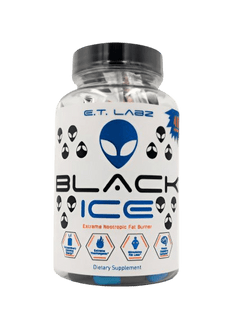
The product
E.T. Labz Black Ice 45 caps
€45,00 · Sold out