

Product guide · Food supplement
Genetic Nutrition Laboratories Bionic Joints · 400g
Joint formula powder from GN Laboratories, 400 g of powder. This guide sets out what the manufacturer states about the composition of Genetic Nutrition Laboratories Bionic Joints · 400g, what independent research says about its main ingredients, and the safety and regulatory points that apply.
Back to the product- Named ingredients
- 12
- Amounts stated
- None
- Status
- Food supplement
- Evidence summaries
- 6
Overview
Manufacturer informationBionic Joints combines Peptan® collagen (types I, II and III), glucosamine, chondroitin, OptiMSM® and hyaluronic acid with quercetin, bromelain, cat's claw extract, vitamin C, calcium, manganese and boron.
Ingredients & composition
Manufacturer information| Ingredient | Amount |
|---|---|
| Peptan® collagen (types i, II and III) | Not stated |
| D-glucosamine HCl | Not stated |
| Chondroitin sulfate | Not stated |
| OptiMSM® | Not stated |
| Hyaluronic acid | Not stated |
| Quercetin | Not stated |
| Bromelain | Not stated |
| Cat's claw extract | Not stated |
| Vitamin C | Not stated |
| Calcium | Not stated |
| Manganese | Not stated |
| Boron | Not stated |
The manufacturer does not state the amount of any ingredient. Without amounts, the research summarised in this guide cannot be related to this product's dose.
Not covered in detail in this guide: Hyaluronic acid, Quercetin, Bromelain, Cat's claw extract, Manganese.
Scientific background
Independent researchCollagen peptides (hydrolysed collagen)
Collagen peptides are hydrolysed collagen from animal skin or bones, sold for joints, tendons and skin.
Glucosamine and chondroitin
Glucosamine and chondroitin are components of cartilage, sold for joint health.
MSM (methylsulfonylmethane)
MSM (methylsulfonylmethane) is an organic sulfur compound sold for joint and connective-tissue support.
Vitamin C (ascorbic acid)
Vitamin C is a water-soluble vitamin needed for collagen formation, immune function and iron absorption. EFSA set population reference intakes of 110 mg a day for men and 95 mg a day for women1.
Calcium
Calcium is the main mineral of bones and teeth and is needed for muscle and nerve function. EFSA based its adult reference values on calcium balance studies2.
Boron
Boron is a trace element found in fruit, vegetables and nuts. It is not established as essential for humans.
Research evidence
Independent researchCollagen peptides (hydrolysed collagen)
A systematic review of eight randomised trials found that collagen combined with resistance or plyometric training increased tendon cross-sectional area in most studies, and tendon stiffness at higher doses (15–30 g a day), but added nothing to muscle strength gains3.
Glucosamine and chondroitin
A network meta-analysis of dietary supplements for knee osteoarthritis compared several supplements, including glucosamine and chondroitin4.
MSM (methylsulfonylmethane)
A 2026 review concluded that MSM should be considered an adjunct with indication-dependent evidence rather than a broadly applicable anti-inflammatory or detoxification supplement5.
Vitamin C (ascorbic acid)
Authorised EU claims include that vitamin C contributes to normal collagen formation, normal immune function, the reduction of tiredness and fatigue, and increased iron absorption6.
Calcium
Authorised EU claims include that calcium is needed for the maintenance of normal bones and teeth and contributes to normal muscle function6.
Boron
A small study reported increased free testosterone after one week of boron supplementation7. Larger controlled trials are lacking.
Evidence limitations
Independent researchThis product does not state all ingredient amounts, so the doses used in research cannot be compared with what one serving provides.
The studies summarised in this guide examined single ingredients. No published study has tested this product or this combination of ingredients.
Collagen peptides (hydrolysed collagen)
Trials are small and mostly in young men3.
Glucosamine and chondroitin
Results vary between preparations and trials, and benefits are at most modest.
MSM (methylsulfonylmethane)
Clinical trials are small and heterogeneous5.
Vitamin C (ascorbic acid)
Intakes above needs are largely excreted; extra benefit from high doses is not established.
Calcium
Benefits beyond adequate intake are not established.
Boron
The evidence comes from very small studies7.
Safety & potential risks
- Do not exceed the recommended daily dose.
- Food supplements should not be used as a substitute for a varied and balanced diet and a healthy lifestyle.
- Keep out of the reach of young children.
Collagen peptides (hydrolysed collagen)
Generally well tolerated; check the source if you avoid certain animal products.
Glucosamine and chondroitin
Glucosamine is often derived from shellfish; people with shellfish allergy or taking warfarin should ask a doctor first.
MSM (methylsulfonylmethane)
Generally well tolerated; mild digestive symptoms can occur5.
Vitamin C (ascorbic acid)
No tolerable upper intake level has been set; high doses can cause digestive upset. People with a history of kidney stones or iron overload should ask a doctor before taking high doses.
Calcium
The EU Scientific Committee on Food set an upper level of 2500 mg a day from all sources8.
Boron
EFSA set a tolerable upper intake level of 10 mg of boron a day for adults8.
Regulatory status
Sold as a food supplement. No health claims are made for this product.
Collagen peptides (hydrolysed collagen)
No health claim for collagen is authorised in the EU; claims for collagen formation relate to vitamin C6.
Glucosamine and chondroitin
No health claim for joint health is authorised in the EU6. Some glucosamine products are authorised medicines9.
MSM (methylsulfonylmethane)
No health claim for this ingredient is authorised in the EU6; it is sold under national food-supplement rules10.
Vitamin C (ascorbic acid)
It is a permitted nutrient in EU food supplements10; authorised claims may only be used in their approved wording and when the product is at least a source of the nutrient6.
Scientific references
- EFSA NDA Panel. Scientific Opinion on Dietary Reference Values for vitamin C. EFSA Journal. 2013;11:3418. DOI 10.2903/j.efsa.2013.3418
- EFSA NDA Panel. Scientific Opinion on Dietary Reference Values for calcium. EFSA Journal. 2015;13:4101. DOI 10.2903/j.efsa.2015.4101
- Buchalski A, Jeanfavre M, Altorelli C, et al. Collagen supplementation on tendon-related structural and performance outcomes: a systematic review. J Funct Morphol Kinesiol. 2026;11:130. PubMed 41900537
- Du P, Ajia A, Xiang Z, et al. Efficacy of dietary supplements for treating knee osteoarthritis: a systematic review and network meta-analysis. Front Nutr. 2025;12:1556133. PubMed 40123938
- Yoon Y, Hwang J, Kim J, et al. Methylsulfonylmethane as a bioactive nutraceutical: molecular mechanisms, clinical evidence, combination therapy, dosing, and safety. Int J Mol Sci. 2026;27. PubMed 42941743
- Commission Regulation (EU) No 432/2012 establishing a list of permitted health claims made on foods. Official Journal of the European Union. Source
- Naghii MR, Mofid M, Asgari AR, et al. Comparative effects of daily and weekly boron supplementation on plasma steroid hormones and proinflammatory cytokines. J Trace Elem Med Biol. 2011;25:54-58. PubMed 21129941
- Scientific Committee on Food / EFSA. Tolerable Upper Intake Levels for Vitamins and Minerals. European Food Safety Authority; 2006. Source
- Directive 2001/83/EC on the Community code relating to medicinal products for human use. Official Journal of the European Union. Source
- Directive 2002/46/EC on the approximation of the laws of the Member States relating to food supplements. Official Journal of the European Union. Source
Sources checked against PubMed, Crossref or the official publisher on 2026-11-04. Manufacturer information is taken from the product's own data and has not been independently tested.
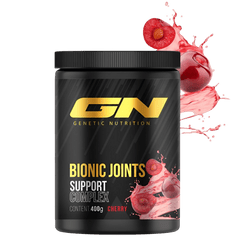
The product
Genetic Nutrition Laboratories Bionic Joints · 400g
€42,00