

Product guide · Food supplement
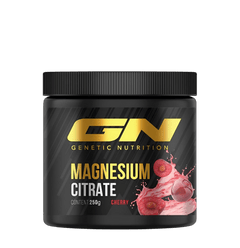
Genetic Nutrition Laboratories Magnesium Citrate - 250g
Magnesium citrate powder from GN Laboratories, 250 g of powder. This guide sets out what the manufacturer states about the composition of Genetic Nutrition Laboratories Magnesium Citrate, what independent research says about its main ingredient, and the safety and regulatory points that apply.
Back to the product- Named ingredients
- 1
- Amounts stated
- All
- Status
- Food supplement
- Evidence summaries
- 1
Overview
Manufacturer informationGN Magnesium Citrate is magnesium citrate powder providing 570 mg of magnesium in each 5 g serving, 152% of the nutrient reference value. This is above the level the EU sets for supplemental magnesium: do not exceed the stated amount.
Ingredients & composition
Manufacturer information| Ingredient | Amount |
|---|---|
| Magnesium (as magnesium citrate) | 570 mg per 5 g serving (152% NRV) |
Serving size stated by the manufacturer: 5 g.
Scientific background
Independent researchMagnesium
Magnesium is an essential mineral involved in hundreds of enzyme reactions, including energy metabolism, muscle contraction and nerve function1.
EFSA set adequate intakes of 350 mg a day for men and 300 mg a day for women, from all sources2. Supplements supply magnesium bound to different partners, such as oxide, citrate or glycinate. Labels should state the amount of elemental magnesium, which is lower than the weight of the compound.
Research evidence
Independent researchMagnesium
Authorised EU claims include that magnesium contributes to a reduction of tiredness and fatigue, to normal muscle function and to normal functioning of the nervous system, for foods that are a source of magnesium3.
For exercise performance, a review found that supplementation may help people with low magnesium status or older adults, but found no clear benefit in people who already have enough magnesium4.
Evidence limitations
Independent researchNo published study has tested this specific product; the research summarised here concerns the ingredient itself.
Safety & potential risks
- Do not exceed the recommended daily dose.
- Food supplements should not be used as a substitute for a varied and balanced diet and a healthy lifestyle.
- Keep out of the reach of young children.
Magnesium
The EU Scientific Committee on Food set a tolerable upper intake level of 250 mg a day for magnesium from supplements and fortified foods (readily dissociable salts and compounds such as magnesium oxide), based on mild, reversible diarrhoea as the most sensitive effect. Magnesium in normal food is not included5.
People with impaired kidney function can accumulate magnesium and should only supplement under medical advice. Magnesium can reduce the absorption of some antibiotics and osteoporosis medicines, so separate them by several hours or ask a pharmacist1.
Regulatory status
Sold as a food supplement. No health claims are made for this product.
Scientific references
- Fiorentini D, Cappadone C, Farruggia G, et al. Magnesium: biochemistry, nutrition, detection, and social impact of diseases linked to its deficiency. Nutrients. 2021;13:1136. PubMed 33808247
- EFSA Panel on Dietetic Products, Nutrition and Allergies. Scientific Opinion on Dietary Reference Values for magnesium. EFSA Journal. 2015;13(7):4186. DOI 10.2903/j.efsa.2015.4186
- Commission Regulation (EU) No 432/2012 establishing a list of permitted health claims made on foods. Official Journal of the European Union. Source
- Zhang Y, Xun P, Wang R, et al. Can magnesium enhance exercise performance? Nutrients. 2017;9:946. PubMed 28846654
- Scientific Committee on Food / EFSA. Tolerable Upper Intake Levels for Vitamins and Minerals. European Food Safety Authority; 2006. Source
- Directive 2002/46/EC on the approximation of the laws of the Member States relating to food supplements. Official Journal of the European Union. Source
Sources checked against PubMed, Crossref or the official publisher on 2026-11-04. Manufacturer information is taken from the product's own data and has not been independently tested.
The product
Genetic Nutrition Laboratories Magnesium Citrate - 250g
€14,99