

Product guide · Under compliance review
Jacked Labs Brain Storm 90 caps
Specialised product from Jacked Labs, 90 capsules. This guide sets out what the manufacturer states about the composition of Jacked Labs Brain Storm 90 caps, what independent research says about its main ingredients, and the safety and regulatory points that apply. Its regulatory status is under compliance review. This guide is educational and does not recommend use.
Back to the product- Named ingredients
- 9
- Amounts stated
- All
- Status
- Under compliance review
- Evidence summaries
- 8
Overview
Manufacturer informationIngredients & composition
Manufacturer information| Ingredient | Amount |
|---|---|
| Lion's mane (Hericium erinaceus) | 500 mg |
| Alpha GPC | 500 mg |
| N-acetyl-L-tyrosine | 400 mg |
| Citicoline | 200 mg |
| Phosphatidylserine | 100 mg |
| Vitamin B6 | 50 mg |
| L-DOPA, standardised to 98% | 50 mg |
| Methylene blue | 5 mg |
| Huperzine A | 300 µg |
Serving size stated by the manufacturer: 3 capsules.
Scientific background
Independent researchLion's mane (Hericium erinaceus)
Lion's mane (Hericium erinaceus) is an edible mushroom studied for compounds that may influence nerve growth factors.
Choline (choline bitartrate, alpha-GPC)
Choline is an essential nutrient used to make cell membranes and the neurotransmitter acetylcholine. EFSA set an adequate intake of 400 mg a day for adults2. Supplements supply it as choline bitartrate, alpha-GPC or citicoline.
L-tyrosine
L-tyrosine is an amino acid that the body uses to make the neurotransmitters dopamine and noradrenaline. It is found in protein-rich foods; N-acetyl-L-tyrosine is a related form3.
Phosphatidylserine, lecithin and phospholipids
Phosphatidylserine and other phospholipids are components of cell membranes. Lecithin is a mixture of phospholipids, often from sunflower or soy.
Vitamin B6 (pyridoxine, P-5-P)
Vitamin B6 is involved in protein metabolism and in making neurotransmitters. EFSA set population reference intakes of 1.7 mg a day for men and 1.6 mg a day for women4.
Mucuna pruriens (velvet bean, L-DOPA)
Mucuna pruriens seeds naturally contain L-DOPA (levodopa), the precursor of dopamine and the main medicine for Parkinson's disease.
Methylene blue
Methylene blue (methylthioninium chloride) is a licensed medicine for methaemoglobinaemia and a dye. It is marketed as a "nootropic".
Huperzine A
Huperzine A is an alkaloid from the club moss Huperzia serrata. It inhibits acetylcholinesterase, the enzyme that breaks down the neurotransmitter acetylcholine, and it has been used as a medicine for dementia in China5.
Research evidence
Independent researchLion's mane (Hericium erinaceus)
A small pilot study in healthy adults found lion's mane safe and well tolerated, with small-to-moderate effects on cognitive function that warrant larger trials6.
Choline (choline bitartrate, alpha-GPC)
The EU authorises claims that choline contributes to normal lipid metabolism, homocysteine metabolism and liver function for foods that are a source of choline7. Claims that choline improves focus or exercise performance are not authorised.
L-tyrosine
A review found that tyrosine may support cognitive performance in short-term stressful or cognitively demanding situations, when these neurotransmitters are temporarily depleted, but found no consistent effect on physical exercise performance3.
Phosphatidylserine, lecithin and phospholipids
A 2026 systematic review concluded that current evidence does not support citicoline or phosphatidylserine compounds as effective cognitive enhancers in mental disorders8.
Vitamin B6 (pyridoxine, P-5-P)
Authorised EU claims include that vitamin B6 contributes to normal protein and glycogen metabolism, normal functioning of the nervous system and the reduction of tiredness and fatigue7.
Mucuna pruriens (velvet bean, L-DOPA)
A 12-month randomised trial in untreated Parkinson's disease in sub-Saharan Africa found Mucuna pruriens could be a cost-effective alternative where commercial levodopa is not available9. There is no good evidence that it raises testosterone or improves mood or performance in healthy people.
Methylene blue
There are no robust trials showing cognitive benefits in healthy people.
Huperzine A
A Cochrane review found some benefit on cognitive function in people with Alzheimer's disease, but only one study was of adequate quality and size, so there was inadequate evidence to recommend its use5. A Cochrane review in mild cognitive impairment found the evidence insufficient10.
There is no good evidence that huperzine A improves focus or performance in healthy people.
Evidence limitations
Independent researchThe studies summarised in this guide examined single ingredients. No published study has tested this product or this combination of ingredients.
Lion's mane (Hericium erinaceus)
The human evidence is from small pilot studies6.
Choline (choline bitartrate, alpha-GPC)
Evidence on cognitive or performance effects in healthy adults is limited.
L-tyrosine
Most studies are small and use single doses in laboratory settings3.
Phosphatidylserine, lecithin and phospholipids
Studies have methodological limitations and a high risk of bias8.
Vitamin B6 (pyridoxine, P-5-P)
Benefits of intakes well above the reference intake have not been shown in people who are not deficient.
Mucuna pruriens (velvet bean, L-DOPA)
The trial used standardised preparations under medical supervision; larger double-blind trials are needed9. Supplements rarely state their L-DOPA content.
Methylene blue
Clinical evidence concerns specific medical uses.
Safety & potential risks
For this product
The manufacturer states 50 mg of vitamin B6 (as stated). That is above the upper level of 12 mg a day for adults1. Intakes above the upper level are not recommended without medical advice.
- Do not use during pregnancy or breastfeeding, or if you have G6PD deficiency.
- Keep out of reach of children.
Lion's mane (Hericium erinaceus)
Generally well tolerated; people with mushroom allergy should avoid it6.
Choline (choline bitartrate, alpha-GPC)
High intakes can cause a fishy body odour, sweating and digestive upset.
L-tyrosine
People taking MAO inhibitors or thyroid medication should not use tyrosine supplements without medical advice.
Phosphatidylserine, lecithin and phospholipids
Generally well tolerated; soy lecithin may not be suitable for people with soy allergy.
Vitamin B6 (pyridoxine, P-5-P)
Excess vitamin B6 can cause peripheral neuropathy (nerve damage with tingling or numbness). EFSA set a tolerable upper intake level of 12 mg a day for adults, including pregnant and lactating women1. Count vitamin B6 from all supplements taken.
Mucuna pruriens (velvet bean, L-DOPA)
L-DOPA can cause nausea, low blood pressure, involuntary movements and psychiatric effects, and it interacts with MAO inhibitors, antipsychotics and Parkinson's medicines. People with heart disease, psychiatric conditions or melanoma history should not use it without medical advice.
Methylene blue
Methylene blue inhibits monoamine oxidase and can cause serotonin syndrome when combined with antidepressants11. It is dangerous for people with G6PD deficiency and turns urine blue-green.
Huperzine A
As an acetylcholinesterase inhibitor, huperzine A can cause nausea, diarrhoea, sweating and a slow heart rate, and it may interact with medicines that affect acetylcholine or heart rate. Anyone taking medication or with heart, lung or digestive conditions should ask a doctor first.
Regulatory status
Flagged for compliance review: this product is listed as a food supplement in our catalogue, but its EU status (food supplement, novel food or medicinal product) has not been verified. No benefits or health claims are made.
Lion's mane (Hericium erinaceus)
No health claim for this ingredient is authorised in the EU7; it is sold under national food-supplement rules12.
Choline (choline bitartrate, alpha-GPC)
Choline is a permitted nutrient source in EU food supplements127.
L-tyrosine
Amino acids such as L-tyrosine are used in EU food supplements under national rules. No health claim is authorised7.
Phosphatidylserine, lecithin and phospholipids
No health claim for this ingredient is authorised in the EU7; it is sold under national food-supplement rules12.
Vitamin B6 (pyridoxine, P-5-P)
It is a permitted nutrient in EU food supplements12; authorised claims may only be used in their approved wording and when the product is at least a source of the nutrient7.
Mucuna pruriens (velvet bean, L-DOPA)
Because it contains levodopa, a medicinal substance, the classification of Mucuna pruriens products differs between EU Member States13. No health claim for this ingredient is authorised in the EU7; botanical ingredients are sold under national food-supplement rules12.
Methylene blue
Methylene blue is a medicinal product in the EU and is not permitted in food supplements13.
Scientific references
- EFSA NDA Panel. Scientific opinion on the tolerable upper intake level for vitamin B6. EFSA Journal. 2023;21:8006. DOI 10.2903/j.efsa.2023.8006
- EFSA Panel on Dietetic Products, Nutrition and Allergies. Dietary Reference Values for choline. EFSA Journal. 2016;14(8):4484. DOI 10.2903/j.efsa.2016.4484
- Jongkees BJ, Hommel B, Kühn S, et al. Effect of tyrosine supplementation on clinical and healthy populations under stress or cognitive demands: a review. J Psychiatr Res. 2015;70:50-57. PubMed 26424423
- EFSA NDA Panel. Dietary Reference Values for vitamin B6. EFSA Journal. 2016;14:4485. DOI 10.2903/j.efsa.2016.4485
- Li J, Wu HM, Zhou RL, et al. Huperzine A for Alzheimer's disease. Cochrane Database Syst Rev. 2008;(2):CD005592. PubMed 18425924
- Evans C, Kalman D, Goodrich J, et al. A pilot proof-of-concept study to evaluate the physiological and cognitive impacts of Hericium erinaceus on healthy adults. Nutrients. 2026;18. PubMed 42884628
- Commission Regulation (EU) No 432/2012 establishing a list of permitted health claims made on foods. Official Journal of the European Union. Source
- Kucuksahin NG, Kaya TT, Halac E, et al. The impact of citicoline/phosphatidylserine supplementation on cognitive performance and executive functions in mental disorders: a systematic review of controlled trials. Hum Psychopharmacol. 2026;41:e70058. PubMed 42538853
- Cilia R, Cham M, Obese V, et al. Mucuna pruriens in untreated Parkinson's disease in sub-Saharan Africa: a 12-month, multicenter, randomized, controlled trial. J Parkinsons Dis. 2026;16:99-109. PubMed 41269916
- Yue J, Dong BR, Lin X, et al. Huperzine A for mild cognitive impairment. Cochrane Database Syst Rev. 2012;12:CD008827. PubMed 23235666
- Basta MN. Postoperative serotonin syndrome following methylene blue administration for vasoplegia after cardiac surgery: a case report and review of the literature. Semin Cardiothorac Vasc Anesth. 2021;25:51-56. PubMed 32951524
- Directive 2002/46/EC on the approximation of the laws of the Member States relating to food supplements. Official Journal of the European Union. Source
- Directive 2001/83/EC on the Community code relating to medicinal products for human use. Official Journal of the European Union. Source
- Regulation (EU) 2015/2283 on novel foods. Official Journal of the European Union. Source
Sources checked against PubMed, Crossref or the official publisher on 2026-11-04. Manufacturer information is taken from the product's own data and has not been independently tested.
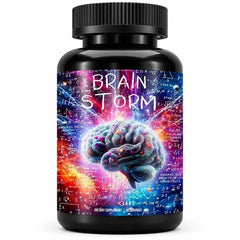
The product
Jacked Labs Brain Storm 90 caps
€49,90 · Sold out