

Product guide · Restricted substance
Smart Brothers NZT – 20 Capsules
Stimulant formula from Smart Brothers, 20 capsules. This guide sets out what the manufacturer states about the composition of Smart Brothers NZT, what independent research says about its main ingredients, and the safety and regulatory points that apply. It contains substances that are not authorised as food or medicine in the EU. This guide is educational: it does not recommend use and gives no directions for use.
Back to the product- Named ingredients
- 10
- Amounts stated
- None
- Status
- Restricted substance
- Evidence summaries
- 9
Overview
Manufacturer informationIngredients & composition
Manufacturer information| Ingredient | Amount |
|---|---|
| Fl-modafinil (CRL-40,940) | Not stated |
| Alpha GPC | Not stated |
| Rhodiola rosea | Not stated |
| Theacrine | Not stated |
| DMHA | Not stated |
| N-acetyl L-tyrosine | Not stated |
| VitaShure® sustained-release caffeine | Not stated |
| Grape seed extract | Not stated |
| Naringenin | Not stated |
| Piperine | Not stated |
The manufacturer does not state the amount of any ingredient. Without amounts, the research summarised in this guide cannot be related to this product's dose.
Not covered in detail in this guide: Naringenin.
Scientific background
Independent researchFlmodafinil (modafinil analogue)
Flmodafinil is a fluorinated analogue of modafinil, a prescription wakefulness drug. It is sold online as a "nootropic".
Choline (choline bitartrate, alpha-GPC)
Choline is an essential nutrient used to make cell membranes and the neurotransmitter acetylcholine. EFSA set an adequate intake of 400 mg a day for adults1. Supplements supply it as choline bitartrate, alpha-GPC or citicoline.
Rhodiola rosea
Rhodiola rosea is a plant from cold regions whose root extract (standardised to rosavins and salidroside) is marketed as an adaptogen.
Theacrine (TeaCrine®) and theobromine
Theacrine is a purine alkaloid related to caffeine, found in some tea plants; theobromine is the related methylxanthine in cocoa. Both are used in stimulant products.
DMHA (2-aminoisoheptane, octodrine) and DMBA
DMHA, also labelled 2-aminoisoheptane or octodrine (2-amino-6-methylheptane), is a synthetic aliphatic amine stimulant found in pre-workout and weight-loss supplements, sometimes alongside the related compound DMBA2.
L-tyrosine
L-tyrosine is an amino acid that the body uses to make the neurotransmitters dopamine and noradrenaline. It is found in protein-rich foods; N-acetyl-L-tyrosine is a related form3.
Caffeine
Caffeine is a stimulant that blocks adenosine receptors in the brain, reducing perceived effort and fatigue. It is found in coffee, tea and energy drinks and is a common ingredient in pre-workout products4.
Dicaffeine malate (sold as Infinergy®) is caffeine bonded to malic acid. Its caffeine adds to the total caffeine in a product, but labels do not always state the caffeine equivalent.
Grape seed extract (OPC)
Grape seed extract is rich in oligomeric proanthocyanidins (OPCs), polyphenolic antioxidants.
Piperine (black pepper extract, BioPerine®)
Piperine is the pungent alkaloid of black pepper, added to supplements as a "bioavailability enhancer".
Research evidence
Independent researchFlmodafinil (modafinil analogue)
There are no published controlled human trials of flmodafinil. Research concerns its detection in doping control5.
Choline (choline bitartrate, alpha-GPC)
The EU authorises claims that choline contributes to normal lipid metabolism, homocysteine metabolism and liver function for foods that are a source of choline6. Claims that choline improves focus or exercise performance are not authorised.
Rhodiola rosea
A 2025 meta-analysis concluded that Rhodiola supplementation can improve endurance performance and related biomarkers, although differences between studies call for cautious interpretation7.
Theacrine (TeaCrine®) and theobromine
An 8-week study of daily theacrine (TeaCrine®) up to 300 mg a day reported no safety concerns and no tolerance effect8. Evidence for performance benefits is limited.
DMHA (2-aminoisoheptane, octodrine) and DMBA
There are no controlled human trials showing that DMHA improves exercise performance or weight loss.
L-tyrosine
A review found that tyrosine may support cognitive performance in short-term stressful or cognitively demanding situations, when these neurotransmitters are temporarily depleted, but found no consistent effect on physical exercise performance3.
Caffeine
The International Society of Sports Nutrition concludes that caffeine consistently improves exercise performance when consumed in doses of about 3–6 mg per kg of body mass, with benefits for muscular endurance, movement velocity, strength, sprinting, jumping and aerobic exercise4.
Grape seed extract (OPC)
A meta-analysis of 16 randomised controlled trials examined the effect of grape seed extract on blood pressure9.
Piperine (black pepper extract, BioPerine®)
A 2026 review of 22 human pharmacokinetic studies found that reports of enhanced nutrient absorption come mainly from manufacturer-affiliated studies, and that independent trials did not confirm enhancement for curcumin or resveratrol at supplement doses10.
Evidence limitations
Independent researchThis product does not state all ingredient amounts, so the doses used in research cannot be compared with what one serving provides.
The studies summarised in this guide examined single ingredients. No published study has tested this product or this combination of ingredients.
Flmodafinil (modafinil analogue)
Effects and safety are unknown.
Choline (choline bitartrate, alpha-GPC)
Evidence on cognitive or performance effects in healthy adults is limited.
Rhodiola rosea
Studies are heterogeneous in extract and dose7.
Theacrine (TeaCrine®) and theobromine
Studies are few, small and often industry-funded8.
DMHA (2-aminoisoheptane, octodrine) and DMBA
The research concerns detection of these stimulants in supplements, not their effects. Analyses of sports and weight-loss supplements have repeatedly found stimulants that were not declared, or quantities different from the label211.
L-tyrosine
Most studies are small and use single doses in laboratory settings3.
Caffeine
Responses vary widely between people, partly because of genetics and habitual caffeine use. Many studies use pure caffeine, so results do not automatically apply to multi-ingredient products4.
Grape seed extract (OPC)
Trials are small and use different extracts and doses9.
Piperine (black pepper extract, BioPerine®)
Piperine raises blood levels of other compounds mainly by inhibiting drug-metabolising enzymes (CYP3A4, CYP2C9) and P-glycoprotein, not by improving absorption10.
Safety & potential risks
Independent researchFlmodafinil (modafinil analogue)
As a modafinil-type stimulant it may cause insomnia, anxiety, headache and raised heart rate. Official medicines control laboratories have found illicit "smart drugs" in products sold in Europe12.
Choline (choline bitartrate, alpha-GPC)
High intakes can cause a fishy body odour, sweating and digestive upset.
Rhodiola rosea
Generally well tolerated; it may interact with antidepressants and blood-pressure or diabetes medicines.
Theacrine (TeaCrine®) and theobromine
Combined with caffeine and other stimulants, these compounds add to the overall stimulant load13.
DMHA (2-aminoisoheptane, octodrine) and DMBA
Human safety data are lacking. As a sympathomimetic amine, DMHA may raise heart rate and blood pressure; avoid combining it with other stimulants. Contaminated supplements have caused positive doping tests11.
L-tyrosine
People taking MAO inhibitors or thyroid medication should not use tyrosine supplements without medical advice.
Caffeine
EFSA concluded that single doses of up to 200 mg, and daily intakes of up to 400 mg from all sources, do not raise safety concerns for healthy adults. For pregnant and breastfeeding women, daily intakes up to 200 mg do not raise concerns for the foetus or infant13.
Higher intakes can cause anxiety, sleep disturbance, raised heart rate and blood pressure, and digestive upset. Combining several caffeine sources (coffee, energy drinks, pre-workouts) raises total intake134.
Grape seed extract (OPC)
Generally well tolerated; it may add to the effect of blood-thinning medicines.
Piperine (black pepper extract, BioPerine®)
Because it inhibits drug-metabolising enzymes, piperine can raise blood levels of prescription medicines, including drugs with a narrow therapeutic index. People taking medication should ask a pharmacist first10.
Regulatory status
This product contains an ingredient that is restricted or not authorised as a food supplement in some or all EU markets. No health benefits or directions for use are given.
Flmodafinil (modafinil analogue)
Modafinil-type substances are prescription medicines; flmodafinil is not an authorised medicine or food in the EU14. Modafinil and its analogues are prohibited in competition by the World Anti-Doping Agency515.
Choline (choline bitartrate, alpha-GPC)
Choline is a permitted nutrient source in EU food supplements166.
Rhodiola rosea
No health claim is authorised6.
Theacrine (TeaCrine®) and theobromine
Theacrine is not an authorised novel food in the EU17; theobromine occurs naturally in cocoa. No health claim for this ingredient is authorised in the EU6; botanical ingredients are sold under national food-supplement rules16.
DMHA (2-aminoisoheptane, octodrine) and DMBA
DMHA and DMBA are not authorised as novel foods in the EU17. Octodrine and related stimulants are prohibited in competition by the World Anti-Doping Agency1115.
L-tyrosine
Amino acids such as L-tyrosine are used in EU food supplements under national rules. No health claim is authorised6.
Caffeine
Caffeine is permitted in EU foods and food supplements, subject to labelling rules. It is not on the World Anti-Doping Agency Prohibited List15.
Scientific references
- EFSA Panel on Dietetic Products, Nutrition and Allergies. Dietary Reference Values for choline. EFSA Journal. 2016;14(8):4484. DOI 10.2903/j.efsa.2016.4484
- Cohen PA, Travis JC, Keizers PHJ, et al. Four experimental stimulants found in sports and weight loss supplements: 2-amino-6-methylheptane (octodrine), 1,4-dimethylamylamine (1,4-DMAA), 1,3-dimethylamylamine (1,3-DMAA) and 1,3-dimethylbutylamine (1,3-DMBA). Clin Toxicol (Phila). 2018;56:421-426. PubMed 29115866
- Jongkees BJ, Hommel B, Kühn S, et al. Effect of tyrosine supplementation on clinical and healthy populations under stress or cognitive demands: a review. J Psychiatr Res. 2015;70:50-57. PubMed 26424423
- Guest NS, VanDusseldorp TA, Nelson MT, et al. International Society of Sports Nutrition position stand: caffeine and exercise performance. J Int Soc Sports Nutr. 2021;18:1. PubMed 33388079
- Krug O, Guddat S, Görgens C, et al. Investigations into the metabolism and elimination of flmodafinil and fladrafinil for sports drug testing purposes. Drug Test Anal. 2026;18:1076-1087. PubMed 42210629
- Commission Regulation (EU) No 432/2012 establishing a list of permitted health claims made on foods. Official Journal of the European Union. Source
- Wang X, Yang X, Gao Z, et al. The effect of Rhodiola rosea supplementation on endurance performance and related biomarkers: a systematic review and meta-analysis. Front Nutr. 2025;12:1645346. PubMed 41080184
- Taylor L, Mumford P, Roberts M, et al. Safety of TeaCrine®, a non-habituating, naturally-occurring purine alkaloid over eight weeks of continuous use. J Int Soc Sports Nutr. 2016;13:2. PubMed 26766930
- Zhang H, Liu S, Li L, et al. The impact of grape seed extract treatment on blood pressure changes: a meta-analysis of 16 randomized controlled trials. Medicine (Baltimore). 2016;95:e4247. PubMed 27537554
- Kaneko M. Enhancement without a rationale? Black pepper extract (piperine) in dietary supplements and the future of formulation: a perspective from Japan. Front Nutr. 2026;13:1981406. PubMed 42964084
- Cohen PA, Travis JC, Vanhee C, et al. Nine prohibited stimulants found in sports and weight loss supplements. Clin Toxicol (Phila). 2021;59:975-981. PubMed 33755516
- Vanhee C, Deconinck E, George M, et al. The occurrence of illicit smart drugs or nootropics in Europe and Australia and their associated dangers: results from a market surveillance study by 12 official medicines control laboratories. J Xenobiot. 2025;15:88. PubMed 40558871
- EFSA Panel on Dietetic Products, Nutrition and Allergies. Scientific Opinion on the safety of caffeine. EFSA Journal. 2015;13(5):4102. DOI 10.2903/j.efsa.2015.4102
- Directive 2001/83/EC on the Community code relating to medicinal products for human use. Official Journal of the European Union. Source
- World Anti-Doping Agency. The Prohibited List (current edition). Source
- Directive 2002/46/EC on the approximation of the laws of the Member States relating to food supplements. Official Journal of the European Union. Source
- Regulation (EU) 2015/2283 on novel foods. Official Journal of the European Union. Source
Sources checked against PubMed, Crossref or the official publisher on 2026-11-04. Manufacturer information is taken from the product's own data and has not been independently tested.
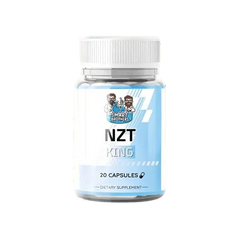
The product
Smart Brothers NZT – 20 Capsules
€59,90