

Product guide · Restricted substance
BPC-157 1000mcg ACFT 60 caps
Research compound from Muscle Metabolix, 60 capsules. This guide sets out what the manufacturer states about the composition of BPC-157 1000mcg ACFT 60 caps, what independent research says about its main ingredients, and the safety and regulatory points that apply. It contains substances that are not authorised as food or medicine in the EU. This guide is educational: it does not recommend use and gives no directions for use.
Back to the product- Named ingredients
- 3
- Amounts stated
- 1 of 3
- Status
- Restricted substance
- Evidence summaries
- 4
Overview
Manufacturer informationIngredients & composition
Manufacturer information| Ingredient | Amount |
|---|---|
| Body protection complex peptide BPC-157 | 1000 mcg |
| Nicotinamide riboside chloride (named "NAD" by the manufacturer) | Not stated |
| A PPAR-delta agonist (compound not named) | Not stated |
The manufacturer does not state the amount of 2 of the 3 ingredients. Without amounts, the research summarised in this guide cannot be related to this product's dose.
Scientific background
Independent researchBPC-157
BPC-157 ("body protection compound") is a synthetic peptide of 15 amino acids, derived from a sequence of a protein in human gastric juice. It is studied for tissue healing1.
Niacin (vitamin B3: nicotinic acid, niacinamide)
Niacin (vitamin B3) is used to make the coenzymes NAD and NADP, which are central to energy metabolism. It exists as nicotinic acid and nicotinamide (niacinamide)2.
NAD+ and NMN
NAD+ (nicotinamide adenine dinucleotide) is a coenzyme in energy metabolism whose levels decline with age. NMN (nicotinamide mononucleotide) and nicotinamide riboside are precursors that the body converts to NAD+.
GW501516 (cardarine)
GW501516 (cardarine) is a PPARδ agonist, not a SARM. It acts on a receptor that regulates fat metabolism and was investigated as a drug candidate for obesity, type 2 diabetes and blood-lipid disorders3.
Research evidence
Independent researchBPC-157
Most research on BPC-157 consists of animal and cell studies reporting effects on tendon, ligament, muscle and gut healing14.
A 2026 systematic review found only three small human studies: a retrospective study of knee injections, a pilot study in interstitial cystitis and a two-person intravenous safety study. All were of poor methodological quality, and the overall certainty of evidence was very low56.
Niacin (vitamin B3: nicotinic acid, niacinamide)
Authorised EU claims include that niacin contributes to normal energy-yielding metabolism, the reduction of tiredness and fatigue, and the maintenance of normal skin7.
NAD+ and NMN
A 2026 systematic review of trials of oral NMN found good short-term tolerability but no clear broad metabolic benefits, with preliminary signals on blood pressure and insulin resistance8. Evidence for injected or nasal NAD+ products is very limited.
GW501516 (cardarine)
Early human studies examined its effects on blood lipids in people with low HDL cholesterol or metabolic syndrome9. There are no published controlled trials of GW501516 for exercise performance in humans.
Evidence limitations
Independent researchThis product does not state all ingredient amounts, so the doses used in research cannot be compared with what one serving provides.
The studies summarised in this guide examined single ingredients. No published study has tested this product or this combination of ingredients.
BPC-157
Reviewers conclude that well-designed human trials are needed to assess safety and efficacy, and that BPC-157 should not be used clinically in humans outside ethically approved, regulated trials54.
Niacin (vitamin B3: nicotinic acid, niacinamide)
Benefits of intakes well above needs are not established in people who are not deficient.
NAD+ and NMN
Trials are short and small; larger, longer trials are needed to confirm efficacy and long-term safety8.
GW501516 (cardarine)
The human evidence consists of small, short metabolic studies. Long-term safety in humans has not been established, and the compound has not been approved as a medicine.
Safety & potential risks
Independent researchBPC-157
Human safety data are minimal. Reviewers highlight risks from unregulated manufacturing and contamination, and unknown clinical safety10. The US FDA placed BPC-157 among bulk substances that may present significant safety risks in compounding, citing possible immunogenicity and peptide impurities11.
Niacin (vitamin B3: nicotinic acid, niacinamide)
The EU Scientific Committee on Food set separate upper levels: 10 mg a day for nicotinic acid, which causes flushing, and 900 mg a day for nicotinamide12. "Flush-free" products use nicotinamide or inositol hexanicotinate.
NAD+ and NMN
Short-term oral NMN was well tolerated in trials8. Injectable NAD+ products are not quality-controlled medicines.
GW501516 (cardarine)
Because GW501516 never completed clinical development, its risks in humans are not adequately characterised. Products sold as research chemicals are not quality-controlled13.
Regulatory status
Contains a peptide that is not authorised as food (including food supplements) or as a medicinal product in the EU. No dosing information for human use is provided.
BPC-157
BPC-157 is not authorised as a medicine or as a food in the EU1415. The World Anti-Doping Agency prohibits non-approved substances such as BPC-157 at all times16.
Niacin (vitamin B3: nicotinic acid, niacinamide)
It is a permitted nutrient in EU food supplements17; authorised claims may only be used in their approved wording and when the product is at least a source of the nutrient7.
Scientific references
- Józwiak M, Bauer M, Kamysz W, et al. Multifunctionality and possible medical application of the BPC 157 peptide: literature and patent review. Pharmaceuticals (Basel). 2025;18:185. PubMed 40005999
- EFSA NDA Panel. Scientific Opinion on Dietary Reference Values for niacin. EFSA Journal. 2014;12:3759. DOI 10.2903/j.efsa.2014.3759
- Pokrywka A, Cholbinski P, Kaliszewski P, et al. Metabolic modulators of the exercise response: doping control analysis of an agonist of the peroxisome proliferator-activated receptor δ (GW501516) and 5-aminoimidazole-4-carboxamide ribonucleotide (AICAR). J Physiol Pharmacol. 2014;65:469-476. PubMed 25179079
- McGuire FP, Martinez R, Lenz A, et al. Regeneration or risk? A narrative review of BPC-157 for musculoskeletal healing. Curr Rev Musculoskelet Med. 2025;18:611-619. PubMed 40789979
- Poolton JT, Minett J, Kazmi A. Human evidence for BPC-157 in orthopaedic and regenerative medicine: a systematic review of efficacy and safety. Acta Orthop Belg. 2026;92. PubMed 42885452
- Lee E, Padgett B. Intra-articular injection of BPC 157 for multiple types of knee pain. Altern Ther Health Med. 2021;27:8-13. PubMed 34324435
- Commission Regulation (EU) No 432/2012 establishing a list of permitted health claims made on foods. Official Journal of the European Union. Source
- Yang W, Huang J, Tang Z, et al. Safety and metabolism-related outcomes of oral nicotinamide mononucleotide supplementation in adults: a systematic review and meta-analysis. Nutrients. 2026;18. PubMed 42514320
- Olson EJ, Pearce GL, Jones NP, et al. Lipid effects of peroxisome proliferator-activated receptor-δ agonist GW501516 in subjects with low high-density lipoprotein cholesterol: characteristics of metabolic syndrome. Arterioscler Thromb Vasc Biol. 2012;32:2289-2294. PubMed 22814748
- Vasireddi N, Hahamyan H, Salata MJ, et al. Emerging use of BPC-157 in orthopaedic sports medicine: a systematic review. HSS J. 2025;21:485-495. PubMed 40756949
- US Food and Drug Administration. Certain bulk drug substances for use in compounding that may present significant safety risks (lists BPC-157). Source
- Scientific Committee on Food / EFSA. Tolerable Upper Intake Levels for Vitamins and Minerals. European Food Safety Authority; 2006. Source
- Van Wagoner RM, Eichner A, Bhasin S, et al. Chemical composition and labeling of substances marketed as selective androgen receptor modulators and sold via the internet. JAMA. 2017;318:2004-2010. PubMed 29183075
- Directive 2001/83/EC on the Community code relating to medicinal products for human use. Official Journal of the European Union. Source
- Regulation (EU) 2015/2283 on novel foods. Official Journal of the European Union. Source
- World Anti-Doping Agency. The Prohibited List (current edition). Source
- Directive 2002/46/EC on the approximation of the laws of the Member States relating to food supplements. Official Journal of the European Union. Source
Sources checked against PubMed, Crossref or the official publisher on 2026-11-04. Manufacturer information is taken from the product's own data and has not been independently tested.
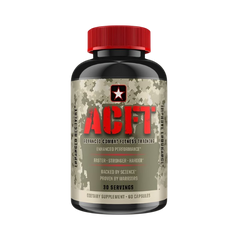
The product
BPC-157 1000mcg ACFT 60 caps
€90,00 · Sold out