

Product guide · Restricted substance
Revange Alpha Male Pro 90 caps
Prohormone product from Revange Nutrition, 90 capsules. This guide sets out what the manufacturer states about the composition of Revange Alpha Male Pro 90 caps, what independent research says about its main ingredients, and the safety and regulatory points that apply. It contains substances that are not authorised as food or medicine in the EU. This guide is educational: it does not recommend use and gives no directions for use.
Back to the product- Named ingredients
- 5
- Amounts stated
- None
- Status
- Restricted substance
- Evidence summaries
- 11
Overview
Manufacturer informationIngredients & composition
Manufacturer information| Ingredient | Amount |
|---|---|
| Stinging nettle, tongkat ali, fenugreek | Not stated |
| 5a-Hydroxy laxogenin & epicatechin | Not stated |
| Armistane & DIM | Not stated |
| L-Dopa & maca root | Not stated |
| Vitamin D3, zinc & boron | Not stated |
The manufacturer does not state the amount of any ingredient. Without amounts, the research summarised in this guide cannot be related to this product's dose.
Scientific background
Independent researchTongkat ali (Eurycoma longifolia)
Tongkat ali (Eurycoma longifolia) is a Southeast Asian shrub whose root extract is marketed for male vitality1.
Fenugreek (Trigonella foenum-graecum)
Fenugreek seed extracts, rich in saponins, are marketed for male vitality and testosterone.
Stinging nettle root (Urtica dioica)
Stinging nettle root extract is used, alone or with saw palmetto, for urinary symptoms of benign prostatic enlargement.
Plant "anabolic" sterols (laxogenin, ecdysterone)
Laxogenin (5α-hydroxy-laxogenin) and ecdysteroids such as ecdysterone (20-hydroxyecdysone, from Ajuga turkestanica or Cyanotis) are plant sterols marketed as natural anabolic agents.
Arimistane (androsta-3,5-diene-7,17-dione)
Arimistane (androsta-3,5-diene-7,17-dione) is sold as an aromatase inhibitor, a substance that blocks the conversion of testosterone to oestrogen. It is also related to the breakdown of 7-oxo-DHEA2.
DIM (3,3'-diindolylmethane)
DIM (3,3'-diindolylmethane) forms from indole-3-carbinol in cruciferous vegetables such as broccoli and is marketed for oestrogen balance.
Mucuna pruriens (velvet bean, L-DOPA)
Mucuna pruriens seeds naturally contain L-DOPA (levodopa), the precursor of dopamine and the main medicine for Parkinson's disease.
Maca (Lepidium meyenii)
Maca is an Andean root vegetable sold as a powder or extract for energy and libido.
Vitamin D3 (cholecalciferol)
Vitamin D is made in the skin in sunlight and is found in a few foods. It is needed for calcium absorption and bone health. EFSA set an adequate intake of 15 µg (600 IU) a day for adults3. 1 µg equals 40 IU.
Zinc
Zinc is an essential trace element for enzymes, immune function and protein synthesis. EFSA set population reference intakes of 9.4–16.3 mg a day for men and 7.5–12.7 mg a day for women, depending on dietary phytate4.
Boron
Boron is a trace element found in fruit, vegetables and nuts. It is not established as essential for humans.
Research evidence
Independent researchTongkat ali (Eurycoma longifolia)
A meta-analysis of clinical trials found that tongkat ali supplementation increased total testosterone in men, particularly in men with low testosterone, but concluded that more research is needed before clinical use1.
Fenugreek (Trigonella foenum-graecum)
A 2026 meta-analysis of randomised trials found a possible small effect on total testosterone, with very uncertain evidence and no stable benefit for free testosterone; it concluded that current evidence does not support testosterone-boosting claims5.
Stinging nettle root (Urtica dioica)
A randomised controlled trial in men with benign prostatic hyperplasia assessed nettle root extract on clinical and biochemical parameters6.
Plant "anabolic" sterols (laxogenin, ecdysterone)
In a 12-week randomised double-blind training study, a commercial ecdysterone product gave no additional benefit over training alone, and its actual content differed markedly from the label7. In castrated rats, 5α-hydroxy-laxogenin showed neither androgenic nor anabolic effects8.
Arimistane (androsta-3,5-diene-7,17-dione)
Published research concerns anti-doping detection of arimistane and its metabolites2. There are no controlled human trials of its effects or safety.
DIM (3,3'-diindolylmethane)
A study in premenopausal women examined whether DIM supplements favoured a benign oestrogen metabolism pathway and reduced body fat9. Evidence in men is lacking.
Mucuna pruriens (velvet bean, L-DOPA)
A 12-month randomised trial in untreated Parkinson's disease in sub-Saharan Africa found Mucuna pruriens could be a cost-effective alternative where commercial levodopa is not available10. There is no good evidence that it raises testosterone or improves mood or performance in healthy people.
Maca (Lepidium meyenii)
A systematic review of animal and human studies found that maca compounds, mainly macamides, increased physical performance, with larger effects at higher doses11.
Vitamin D3 (cholecalciferol)
Authorised EU claims include that vitamin D contributes to the maintenance of normal bones, muscle function and immune function12.
In the large VITAL trial, 2000 IU (50 µg) a day of vitamin D3 did not lower the incidence of invasive cancer or major cardiovascular events compared with placebo13. A meta-analysis found that vitamin D supplements did not prevent fractures or falls, or have clinically meaningful effects on bone density14.
Zinc
Authorised EU claims include that zinc contributes to normal immune function, normal fertility and reproduction, and the maintenance of normal testosterone levels in the blood12. These claims do not mean that extra zinc raises testosterone in people with adequate zinc.
Boron
A small study reported increased free testosterone after one week of boron supplementation15. Larger controlled trials are lacking.
Evidence limitations
Independent researchThis product does not state all ingredient amounts, so the doses used in research cannot be compared with what one serving provides.
The studies summarised in this guide examined single ingredients. No published study has tested this product or this combination of ingredients.
Tongkat ali (Eurycoma longifolia)
The trials are small, often industry-funded and use different extracts1.
Fenugreek (Trigonella foenum-graecum)
The evidence is very uncertain5.
Stinging nettle root (Urtica dioica)
Trials are few and small.
Plant "anabolic" sterols (laxogenin, ecdysterone)
Label accuracy is poor and human trials are few7.
Arimistane (androsta-3,5-diene-7,17-dione)
Effects in humans are not established.
DIM (3,3'-diindolylmethane)
Human trials are few and small.
Mucuna pruriens (velvet bean, L-DOPA)
The trial used standardised preparations under medical supervision; larger double-blind trials are needed10. Supplements rarely state their L-DOPA content.
Maca (Lepidium meyenii)
Much of the evidence is from animal studies11.
Vitamin D3 (cholecalciferol)
Benefits are clearest for correcting deficiency. Trials in people with adequate vitamin D status show little benefit for bone, cancer or heart outcomes1314.
Zinc
Effects beyond correcting low zinc status are not established.
Boron
The evidence comes from very small studies15.
Safety & potential risks
Independent researchTongkat ali (Eurycoma longifolia)
Generally well tolerated in short trials; long-term safety is not established. People with hormone-sensitive conditions should ask a doctor first.
Fenugreek (Trigonella foenum-graecum)
Generally well tolerated; it may lower blood sugar and can cause digestive upset. Avoid in pregnancy.
Stinging nettle root (Urtica dioica)
Generally well tolerated; urinary symptoms should be assessed by a doctor.
Plant "anabolic" sterols (laxogenin, ecdysterone)
Human safety data are limited.
Arimistane (androsta-3,5-diene-7,17-dione)
Blocking oestrogen production can affect bone, lipids and mood. Human safety data are lacking.
DIM (3,3'-diindolylmethane)
DIM can affect hormone metabolism; people with hormone-sensitive conditions or taking hormonal medicines should ask a doctor first.
Mucuna pruriens (velvet bean, L-DOPA)
L-DOPA can cause nausea, low blood pressure, involuntary movements and psychiatric effects, and it interacts with MAO inhibitors, antipsychotics and Parkinson's medicines. People with heart disease, psychiatric conditions or melanoma history should not use it without medical advice.
Maca (Lepidium meyenii)
Generally regarded as safe as a food.
Vitamin D3 (cholecalciferol)
EFSA set a tolerable upper intake level of 100 µg (4000 IU) a day for adults, based on persistent hypercalciuria (excess calcium in the urine) as an early sign of excess vitamin D16. Long-term intakes above this level can raise blood calcium and harm the kidneys. High-dose products should only be used on medical advice.
Zinc
The EU Scientific Committee on Food set a tolerable upper intake level of 25 mg a day for adults; long-term excess can cause copper deficiency17.
Boron
EFSA set a tolerable upper intake level of 10 mg of boron a day for adults17.
Regulatory status
Contains arimistane (androsta-3,5-diene-7,17-dione), a designer aromatase-inhibiting compound that is not authorised as food (novel food) in the EU and is on the WADA Prohibited List. No dosing information for human use is provided.
Tongkat ali (Eurycoma longifolia)
No health claim for this ingredient is authorised in the EU12; botanical ingredients are sold under national food-supplement rules18.
Fenugreek (Trigonella foenum-graecum)
No health claim for this ingredient is authorised in the EU12; botanical ingredients are sold under national food-supplement rules18.
Stinging nettle root (Urtica dioica)
No health claim for this ingredient is authorised in the EU12; it is sold under national food-supplement rules18.
Plant "anabolic" sterols (laxogenin, ecdysterone)
These plant sterols are not authorised novel foods in the EU19. Ecdysterone is on the World Anti-Doping Agency monitoring programme20.
Arimistane (androsta-3,5-diene-7,17-dione)
Aromatase inhibitors are prohibited at all times by the World Anti-Doping Agency220, and arimistane is not authorised as a food ingredient in the EU19.
DIM (3,3'-diindolylmethane)
No health claim for this ingredient is authorised in the EU12; it is sold under national food-supplement rules18.
Mucuna pruriens (velvet bean, L-DOPA)
Because it contains levodopa, a medicinal substance, the classification of Mucuna pruriens products differs between EU Member States21. No health claim for this ingredient is authorised in the EU12; botanical ingredients are sold under national food-supplement rules18.
Maca (Lepidium meyenii)
No health claim for this ingredient is authorised in the EU12; it is sold under national food-supplement rules18.
Vitamin D3 (cholecalciferol)
It is a permitted nutrient in EU food supplements18; authorised claims may only be used in their approved wording and when the product is at least a source of the nutrient12.
Scientific references
- Leisegang K, Finelli R, Sikka SC, et al. Eurycoma longifolia (Jack) improves serum total testosterone in men: a systematic review and meta-analysis of clinical trials. Medicina (Kaunas). 2022;58:1047. PubMed 36013514
- Martínez Brito D, Leogrande P, Colamonici C, et al. Arimistane: degradation product or metabolite of 7-oxo-DHEA? Drug Test Anal. 2021;13:1430-1439. PubMed 33783974
- EFSA NDA Panel. Dietary reference values for vitamin D. EFSA Journal. 2016;14:4547. DOI 10.2903/j.efsa.2016.4547
- EFSA NDA Panel. Scientific Opinion on Dietary Reference Values for zinc. EFSA Journal. 2014;12:3844. DOI 10.2903/j.efsa.2014.3844
- Yang P, Niu Z, Guo J, et al. Effects of oral fenugreek-derived preparations on testosterone-related outcomes in adult men: a systematic review and meta-analysis of randomized placebo-controlled trials. Front Nutr. 2026;13:1903508. PubMed 42688439
- Akbar Karami A, Sheikhsoleimani M, Reza Memarzadeh M, et al. Urtica dioica root extract on clinical and biochemical parameters in patients with benign prostatic hyperplasia, randomized controlled trial. Pak J Biol Sci. 2020;23:1338-1344. PubMed 32981268
- Dissemond J, Havers T, Held S, et al. How reliable is the labeling of a commercial phytosteroid product? A 12-week randomized double-blind training study. J Int Soc Sports Nutr. 2025;22:2540408. PubMed 40781783
- Derwand D, Zierau O, Wolf CA, et al. Effects of the dietary supplement 5α-hydroxy-laxogenin in the orchiectomized rat model. Drug Test Anal. 2025;17:1743-1749. PubMed 40038867
- Godínez-Martínez E, Santillán R, Sámano R, et al. Effectiveness of 3,3'-diindolylmethane supplements on favoring the benign estrogen metabolism pathway and decreasing body fat in premenopausal women. Nutr Cancer. 2023;75:510-519. PubMed 36111381
- Cilia R, Cham M, Obese V, et al. Mucuna pruriens in untreated Parkinson's disease in sub-Saharan Africa: a 12-month, multicenter, randomized, controlled trial. J Parkinsons Dis. 2026;16:99-109. PubMed 41269916
- Huerta Ojeda Á, Rodríguez Rojas J, Cancino-López J, et al. Effects of maca (Lepidium meyenii Walp.) on physical performance in animals and humans: a systematic review and meta-analysis. Nutrients. 2024;17:107. PubMed 39796542
- Commission Regulation (EU) No 432/2012 establishing a list of permitted health claims made on foods. Official Journal of the European Union. Source
- Manson JE, Cook NR, Lee IM, et al. Vitamin D supplements and prevention of cancer and cardiovascular disease. N Engl J Med. 2019;380:33-44. PubMed 30415629
- Bolland MJ, Grey A, Avenell A. Effects of vitamin D supplementation on musculoskeletal health: a systematic review, meta-analysis, and trial sequential analysis. Lancet Diabetes Endocrinol. 2018;6:847-858. PubMed 30293909
- Naghii MR, Mofid M, Asgari AR, et al. Comparative effects of daily and weekly boron supplementation on plasma steroid hormones and proinflammatory cytokines. J Trace Elem Med Biol. 2011;25:54-58. PubMed 21129941
- EFSA NDA Panel. Scientific opinion on the tolerable upper intake level for vitamin D, including the derivation of a conversion factor for calcidiol monohydrate. EFSA Journal. 2023;21:8145. DOI 10.2903/j.efsa.2023.8145
- Scientific Committee on Food / EFSA. Tolerable Upper Intake Levels for Vitamins and Minerals. European Food Safety Authority; 2006. Source
- Directive 2002/46/EC on the approximation of the laws of the Member States relating to food supplements. Official Journal of the European Union. Source
- Regulation (EU) 2015/2283 on novel foods. Official Journal of the European Union. Source
- World Anti-Doping Agency. The Prohibited List (current edition). Source
- Directive 2001/83/EC on the Community code relating to medicinal products for human use. Official Journal of the European Union. Source
Sources checked against PubMed, Crossref or the official publisher on 2026-11-04. Manufacturer information is taken from the product's own data and has not been independently tested.
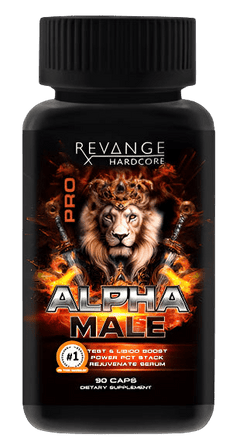
The product
Revange Alpha Male Pro 90 caps
€89,90 · Sold out