

Product guide · Restricted substance
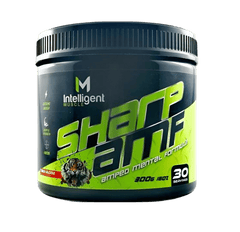
Intelligent Muscle Sharp AMF 300 g
Stimulant formula from Intelligent Muscle, 300 g of powder. This guide sets out what the manufacturer states about the composition of Intelligent Muscle Sharp AMF 300 g, what independent research says about its main ingredients, and the safety and regulatory points that apply. It contains substances that are not authorised as food or medicine in the EU. This guide is educational: it does not recommend use and gives no directions for use.
Back to the product- Named ingredients
- 18
- Amounts stated
- None
- Status
- Restricted substance
- Evidence summaries
- 14
Overview
Manufacturer informationIngredients & composition
Manufacturer information| Ingredient | Amount |
|---|---|
| DMAA | Not stated |
| DMHA (2-aminoisoheptane) | Not stated |
| Yohimbine (yohimbe extract 8%, alpha-yohimbine HCl / rauwolscine, yohimbine HCl) | Not stated |
| Higenamine | Not stated |
| Methyl-synephrine HCl | Not stated |
| Beta-alanine | Not stated |
| L-citrulline | Not stated |
| Agmatine sulfate | Not stated |
| Acetyl-L-tyrosine | Not stated |
| Green tea extract | Not stated |
| Methyl hordenine HCl | Not stated |
| Citrus aurantium | Not stated |
| Grape seed extract | Not stated |
| Synephrine HCl | Not stated |
| Piperine | Not stated |
| Naringenin | Not stated |
| N-methyl-tyramine | Not stated |
| Octopamine HCl | Not stated |
The manufacturer does not state the amount of any ingredient. Without amounts, the research summarised in this guide cannot be related to this product's dose.
Not covered in detail in this guide: Naringenin, N-methyl-tyramine.
Scientific background
Independent researchDMAA (1,3-dimethylamylamine)
DMAA (1,3-dimethylamylamine, methylhexanamine) is a synthetic stimulant that constricts blood vessels and raises blood pressure. It has been sold in pre-workout and weight-loss supplements and as a recreational stimulant1.
DMHA (2-aminoisoheptane, octodrine) and DMBA
DMHA, also labelled 2-aminoisoheptane or octodrine (2-amino-6-methylheptane), is a synthetic aliphatic amine stimulant found in pre-workout and weight-loss supplements, sometimes alongside the related compound DMBA2.
Yohimbine (yohimbe bark, rauwolscine)
Yohimbine is an alkaloid from the bark of the African tree Pausinystalia yohimbe. It blocks α2-adrenergic receptors, which increases noradrenaline release. Rauwolscine (alpha-yohimbine) is a closely related alkaloid.
Higenamine
Higenamine is a plant alkaloid that stimulates β2-adrenergic receptors, the same receptor family targeted by asthma bronchodilators. It is found in plants such as Nandina domestica3.
Synephrine (bitter orange, Citrus aurantium)
p-Synephrine is the main protoalkaloid of bitter orange (Citrus aurantium). It is structurally related to adrenaline and is used in weight-loss and pre-workout products4.
Beta-alanine
Beta-alanine is an amino acid that combines with histidine in muscle to form carnosine, which helps buffer acid during intense exercise5.
L-citrulline and citrulline malate
L-citrulline is an amino acid that the body converts to arginine, a precursor of nitric oxide, which widens blood vessels. Citrulline malate combines citrulline with malic acid6.
Agmatine sulfate
Agmatine is formed in the body from the amino acid arginine and acts as a signalling molecule in the nervous system. It is sold as agmatine sulfate in sports and nootropic products.
L-tyrosine
L-tyrosine is an amino acid that the body uses to make the neurotransmitters dopamine and noradrenaline. It is found in protein-rich foods; N-acetyl-L-tyrosine is a related form7.
Green tea extract (catechins, EGCG)
Green tea extracts are concentrated sources of catechins, mainly epigallocatechin gallate (EGCG), and usually contain caffeine.
Hordenine
Hordenine (N,N-dimethyltyramine) is a phenethylamine alkaloid found in barley and beer. It acts on the dopamine D2 receptor and is marketed in pre-workout and fat-burning products8.
Grape seed extract (OPC)
Grape seed extract is rich in oligomeric proanthocyanidins (OPCs), polyphenolic antioxidants.
Piperine (black pepper extract, BioPerine®)
Piperine is the pungent alkaloid of black pepper, added to supplements as a "bioavailability enhancer".
Octopamine and halostachine
Octopamine and halostachine (N-methylphenylethanolamine) are phenethylamine-type amines related to synephrine and adrenaline. They appear in weight-loss and pre-workout products9.
Research evidence
Independent researchDMAA (1,3-dimethylamylamine)
No controlled trials show that DMAA improves athletic performance or weight loss. A pharmacokinetic study of a single 25 mg dose did not find meaningful changes in resting heart rate, blood pressure or body temperature10.
DMHA (2-aminoisoheptane, octodrine) and DMBA
There are no controlled human trials showing that DMHA improves exercise performance or weight loss.
Yohimbine (yohimbe bark, rauwolscine)
A small trial in professional soccer players found reduced body fat with yohimbine but no change in body mass, muscle mass or performance11. Larger, independent trials are lacking.
Higenamine
There are no controlled human trials showing that higenamine improves exercise performance or weight loss. Analyses of US supplements found up to about 62 mg per serving, with labels that often did not state the amount3.
Synephrine (bitter orange, Citrus aurantium)
A review of human clinical studies reported small increases in energy expenditure and modest weight loss with bitter orange extract or p-synephrine products over 6–12 weeks, many in combination with other ingredients4.
Beta-alanine
The International Society of Sports Nutrition concludes that 4–6 g a day for at least 2–4 weeks raises muscle carnosine and improves performance in exercise lasting about 1–4 minutes5.
A meta-analysis found a significant overall ergogenic effect, with the size of the benefit depending on the type and duration of exercise12.
L-citrulline and citrulline malate
A review of human studies found that citrulline supplementation raises plasma arginine, and that several studies report improved exercise performance or recovery, but the results are inconsistent6.
Agmatine sulfate
Controlled human research on agmatine for exercise performance is very limited. Published human data are mostly small studies and a long-term case report13.
L-tyrosine
A review found that tyrosine may support cognitive performance in short-term stressful or cognitively demanding situations, when these neurotransmitters are temporarily depleted, but found no consistent effect on physical exercise performance7.
Green tea extract (catechins, EGCG)
Evidence for weight loss from green tea extracts is limited and effects are small; no health claim is authorised14.
Hordenine
There are no controlled human trials of hordenine for exercise performance or weight loss. Human research concerns its absorption from beer, where plasma levels were too low for a direct effect on dopamine receptors8.
Grape seed extract (OPC)
A meta-analysis of 16 randomised controlled trials examined the effect of grape seed extract on blood pressure15.
Piperine (black pepper extract, BioPerine®)
A 2026 review of 22 human pharmacokinetic studies found that reports of enhanced nutrient absorption come mainly from manufacturer-affiliated studies, and that independent trials did not confirm enhancement for curcumin or resveratrol at supplement doses16.
Evidence limitations
Independent researchThis product does not state all ingredient amounts, so the doses used in research cannot be compared with what one serving provides.
The studies summarised in this guide examined single ingredients. No published study has tested this product or this combination of ingredients.
DMAA (1,3-dimethylamylamine)
The single-dose study does not reflect repeated use, higher doses or combination with other stimulants and exercise10. Analyses of sports and weight-loss supplements have repeatedly found stimulants that were not declared, or quantities different from the label218.
DMHA (2-aminoisoheptane, octodrine) and DMBA
The research concerns detection of these stimulants in supplements, not their effects. Analyses of sports and weight-loss supplements have repeatedly found stimulants that were not declared, or quantities different from the label218.
Yohimbine (yohimbe bark, rauwolscine)
Evidence for fat loss or performance is limited to small studies. Supplement labels are often inaccurate: of 49 US yohimbine supplements tested, only 2 gave accurate information on both the quantity and the known adverse effects19.
Higenamine
Published research concerns supplement analysis rather than effects in humans3.
Synephrine (bitter orange, Citrus aurantium)
Most studies are small, short and use multi-ingredient products, and longer studies are needed to establish efficacy and safety4.
Beta-alanine
Effects on strength and on endurance exercise beyond about 25 minutes are not established5. A single serving taken before training does not reproduce the daily supplementation used in research.
L-citrulline and citrulline malate
Studies differ in dose, form (citrulline or citrulline malate, often with an unverified ratio) and exercise test, and many are small. The mechanism behind any performance effect is not established6.
Agmatine sulfate
There are no large randomised trials showing a performance benefit from agmatine in healthy people. Claims of better "pump" or focus are not established.
L-tyrosine
Most studies are small and use single doses in laboratory settings7.
Green tea extract (catechins, EGCG)
Results depend on caffeine content and extract type.
Hordenine
Supplement amounts are much higher than the amounts studied from beer, and their effects have not been studied8.
Grape seed extract (OPC)
Trials are small and use different extracts and doses15.
Piperine (black pepper extract, BioPerine®)
Piperine raises blood levels of other compounds mainly by inhibiting drug-metabolising enzymes (CYP3A4, CYP2C9) and P-glycoprotein, not by improving absorption16.
Safety & potential risks
Independent researchDMAA (1,3-dimethylamylamine)
DMAA is a potent pressor agent. Cases of cerebral haemorrhage have been reported in adults after using DMAA1.
DMHA (2-aminoisoheptane, octodrine) and DMBA
Human safety data are lacking. As a sympathomimetic amine, DMHA may raise heart rate and blood pressure; avoid combining it with other stimulants. Contaminated supplements have caused positive doping tests18.
Yohimbine (yohimbe bark, rauwolscine)
A review of poison-centre cases found that adverse events with yohimbine products had more serious outcomes than average exposures, including rapid heart rate, anxiety, high blood pressure and agitation20. People with heart conditions, high blood pressure, anxiety disorders or taking antidepressants should not use yohimbine.
Higenamine
As a β2-agonist, higenamine may raise heart rate and cause palpitations, and its safety at supplement doses has not been established3.
Synephrine (bitter orange, Citrus aurantium)
The reviewed studies did not report serious adverse effects at the doses tested4, but combining synephrine with caffeine and other stimulants increases cardiovascular stress. People with high blood pressure, heart-rhythm disorders or taking stimulant or antidepressant medication should avoid it.
Beta-alanine
The only commonly reported side effect is paraesthesia, a harmless tingling of the skin that is more likely with larger single doses5.
L-citrulline and citrulline malate
Citrulline is generally well tolerated in the doses studied. Digestive discomfort has been reported, and people taking blood-pressure or erectile-dysfunction medication should ask a doctor, because citrulline raises arginine and nitric oxide production6.
Agmatine sulfate
A case report described 5 years of high daily agmatine intake without detected adverse effects13. One case report cannot establish safety for the wider population.
L-tyrosine
People taking MAO inhibitors or thyroid medication should not use tyrosine supplements without medical advice.
Green tea extract (catechins, EGCG)
EFSA concluded that intakes of 800 mg EGCG a day or more, taken as a food supplement, significantly increased liver transaminases, a sign of liver stress21. Green tea extracts have been linked to liver injury; take them with food and do not exceed the label serving.
Hordenine
Human safety data at supplement doses are lacking. It may interact with MAO inhibitors and other stimulants. Analyses of sports and weight-loss supplements have repeatedly found stimulants that were not declared, or quantities different from the label218.
Grape seed extract (OPC)
Generally well tolerated; it may add to the effect of blood-thinning medicines.
Piperine (black pepper extract, BioPerine®)
Because it inhibits drug-metabolising enzymes, piperine can raise blood levels of prescription medicines, including drugs with a narrow therapeutic index. People taking medication should ask a pharmacist first16.
Octopamine and halostachine
These amines may raise heart rate and blood pressure, especially with caffeine and other stimulants.
Regulatory status
Contains 1,3-dimethylamylamine (DMAA), a synthetic stimulant that is not authorised as a novel food in the EU and is on the WADA Prohibited List. Contains DMHA/DMBA, a synthetic stimulant that is not authorised as a novel food in the EU. Contains higenamine and/or octopamine, which are on the WADA Prohibited List. Contains yohimbe bark extract. Yohimbe bark and its preparations are prohibited in foods, including food supplements, in the EU (Regulation (EC) No 1925/2006, Annex III, Part A, as amended by Regulation (EU) 2019/650). Contains yohimbine. Isolated yohimbine is classified as a medicinal substance in several EU member states; its legal status depends on the country of sale.
DMAA (1,3-dimethylamylamine)
DMAA is not authorised as food or as a food supplement ingredient in the EU22 and is prohibited in competition by the World Anti-Doping Agency223.
DMHA (2-aminoisoheptane, octodrine) and DMBA
DMHA and DMBA are not authorised as novel foods in the EU22. Octodrine and related stimulants are prohibited in competition by the World Anti-Doping Agency1823.
Yohimbine (yohimbe bark, rauwolscine)
Yohimbine is a pharmacologically active substance. Its use in food is regulated under Regulation (EC) No 1925/2006 and national rules24, and several EU Member States treat it as a medicinal substance25.
Higenamine
Higenamine is not an authorised food supplement ingredient in the EU22 and is prohibited at all times by the World Anti-Doping Agency as a β2-agonist1823.
Synephrine (bitter orange, Citrus aurantium)
Bitter orange extracts are used in EU food supplements under national rules, which differ between Member States26.
Beta-alanine
Beta-alanine is used in EU food supplements under national rules. No health claim is authorised14.
L-citrulline and citrulline malate
L-citrulline is used in EU food supplements under national rules. No health claim for citrulline is authorised in the EU14.
Agmatine sulfate
Agmatine sulfate is used in some EU food supplements under national rules. No health claim is authorised14. Whether a product needs novel food authorisation depends on its history of use22.
L-tyrosine
Amino acids such as L-tyrosine are used in EU food supplements under national rules. No health claim is authorised14.
Green tea extract (catechins, EGCG)
The EU restricts green tea extracts containing EGCG in foods under Regulation (EC) No 1925/2006 on the addition of other substances to foods2421. No health claim for this ingredient is authorised in the EU14; it is sold under national food-supplement rules26.
Hordenine
Hordenine is not an authorised food supplement ingredient in the EU; its status depends on novel food rules22.
Grape seed extract (OPC)
No health claim for this ingredient is authorised in the EU14; it is sold under national food-supplement rules26.
Scientific references
- Gee P, Tallon C, Long N, et al. Use of recreational drug 1,3-dimethylamylamine (DMAA) associated with cerebral hemorrhage. Ann Emerg Med. 2012;60:431-434. PubMed 22575212
- Cohen PA, Travis JC, Keizers PHJ, et al. Four experimental stimulants found in sports and weight loss supplements: 2-amino-6-methylheptane (octodrine), 1,4-dimethylamylamine (1,4-DMAA), 1,3-dimethylamylamine (1,3-DMAA) and 1,3-dimethylbutylamine (1,3-DMBA). Clin Toxicol (Phila). 2018;56:421-426. PubMed 29115866
- Cohen PA, Travis JC, Keizers PHJ, et al. The stimulant higenamine in weight loss and sports supplements. Clin Toxicol (Phila). 2019;57:125-130. PubMed 30188222
- Stohs SJ, Preuss HG, Shara M. A review of the human clinical studies involving Citrus aurantium (bitter orange) extract and its primary protoalkaloid p-synephrine. Int J Med Sci. 2012;9:527-538. PubMed 22991491
- Trexler ET, Smith-Ryan AE, Stout JR, et al. International society of sports nutrition position stand: beta-alanine. J Int Soc Sports Nutr. 2015;12:30. PubMed 26175657
- Gonzalez AM, Trexler ET. Effects of citrulline supplementation on exercise performance in humans: a review of the current literature. J Strength Cond Res. 2020;34:1480-1495. PubMed 31977835
- Jongkees BJ, Hommel B, Kühn S, et al. Effect of tyrosine supplementation on clinical and healthy populations under stress or cognitive demands: a review. J Psychiatr Res. 2015;70:50-57. PubMed 26424423
- Sommer T, Göen T, Budnik N, et al. Absorption, biokinetics, and metabolism of the dopamine D2 receptor agonist hordenine (N,N-dimethyltyramine) after beer consumption in humans. J Agric Food Chem. 2020;68:1998-2006. PubMed 31984737
- Zhao J, Wang M, Avula B, et al. Detection and quantification of phenethylamines in sports dietary supplements by NMR approach. J Pharm Biomed Anal. 2018;151:347-355. PubMed 29413984
- Schilling BK, Hammond KG, Bloomer RJ, et al. Physiological and pharmacokinetic effects of oral 1,3-dimethylamylamine administration in men. BMC Pharmacol Toxicol. 2013;14:52. PubMed 24090077
- Ostojic SM. Yohimbine: the effects on body composition and exercise performance in soccer players. Res Sports Med. 2006;14:289-299. PubMed 17214405
- Saunders B, Elliott-Sale K, Artioli GG, et al. β-alanine supplementation to improve exercise capacity and performance: a systematic review and meta-analysis. Br J Sports Med. 2017;51:658-669. PubMed 27797728
- Gilad GM, Gilad VH. Long-term (5 years), high daily dosage of dietary agmatine: evidence of safety: a case report. J Med Food. 2014;17:1256-1259. PubMed 25247837
- Commission Regulation (EU) No 432/2012 establishing a list of permitted health claims made on foods. Official Journal of the European Union. Source
- Zhang H, Liu S, Li L, et al. The impact of grape seed extract treatment on blood pressure changes: a meta-analysis of 16 randomized controlled trials. Medicine (Baltimore). 2016;95:e4247. PubMed 27537554
- Kaneko M. Enhancement without a rationale? Black pepper extract (piperine) in dietary supplements and the future of formulation: a perspective from Japan. Front Nutr. 2026;13:1981406. PubMed 42964084
- Pawar RS, Grundel E. Overview of regulation of dietary supplements in the USA and issues of adulteration with phenethylamines (PEAs). Drug Test Anal. 2017;9:500-517. PubMed 27259162
- Cohen PA, Travis JC, Vanhee C, et al. Nine prohibited stimulants found in sports and weight loss supplements. Clin Toxicol (Phila). 2021;59:975-981. PubMed 33755516
- Cohen PA, Wang YH, Maller G, et al. Pharmaceutical quantities of yohimbine found in dietary supplements in the USA. Drug Test Anal. 2016;8:357-369. PubMed 26391406
- Kearney T, Tu N, Haller C. Adverse drug events associated with yohimbine-containing products: a retrospective review of the California Poison Control System reported cases. Ann Pharmacother. 2010;44:1022-1029. PubMed 20442348
- EFSA ANS Panel, Younes M, Aggett P, et al. Scientific opinion on the safety of green tea catechins. EFSA J. 2018;16:e05239. PubMed 32625874
- Regulation (EU) 2015/2283 on novel foods. Official Journal of the European Union. Source
- World Anti-Doping Agency. The Prohibited List (current edition). Source
- Regulation (EC) No 1925/2006 on the addition of vitamins and minerals and of certain other substances to foods. Official Journal of the European Union. Source
- Directive 2001/83/EC on the Community code relating to medicinal products for human use. Official Journal of the European Union. Source
- Directive 2002/46/EC on the approximation of the laws of the Member States relating to food supplements. Official Journal of the European Union. Source
Sources checked against PubMed, Crossref or the official publisher on 2026-11-04. Manufacturer information is taken from the product's own data and has not been independently tested.
The product
Intelligent Muscle Sharp AMF 300 g
€47,90 · Sold out