

Product guide · Restricted substance
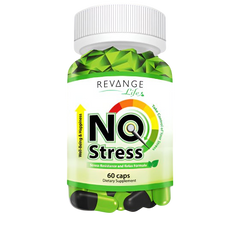
Revange No Stress
Product with a restricted ingredient from Revange Nutrition, capsules. This guide sets out what the manufacturer states about the composition of Revange No Stress, what independent research says about its main ingredients, and the safety and regulatory points that apply. It contains substances that are not authorised as food or medicine in the EU. This guide is educational: it does not recommend use and gives no directions for use.
Back to the product- Named ingredients
- 7
- Amounts stated
- None
- Status
- Restricted substance
- Evidence summaries
- 7
Overview
Manufacturer informationIngredients & composition
Manufacturer information| Ingredient | Amount |
|---|---|
| Phenibut | Not stated |
| Rhodiola rosea | Not stated |
| 5-HTP | Not stated |
| L-Theanine | Not stated |
| Mucuna pruriens extract | Not stated |
| Naringin & grape seed extract | Not stated |
| Piperine (95%) | Not stated |
The manufacturer does not state the amount of any ingredient. Without amounts, the research summarised in this guide cannot be related to this product's dose.
Scientific background
Independent researchPhenibut
Phenibut (β-phenyl-γ-aminobutyric acid) is a GABA-B receptor agonist, a central nervous system depressant used as a medicine in Russia1.
Rhodiola rosea
Rhodiola rosea is a plant from cold regions whose root extract (standardised to rosavins and salidroside) is marketed as an adaptogen.
5-HTP (5-hydroxytryptophan)
5-HTP is the direct precursor of the neurotransmitter serotonin and is usually extracted from Griffonia simplicifolia seeds2.
L-theanine
L-theanine is an amino acid found in tea leaves, often combined with caffeine.
Mucuna pruriens (velvet bean, L-DOPA)
Mucuna pruriens seeds naturally contain L-DOPA (levodopa), the precursor of dopamine and the main medicine for Parkinson's disease.
Grape seed extract (OPC)
Grape seed extract is rich in oligomeric proanthocyanidins (OPCs), polyphenolic antioxidants.
Piperine (black pepper extract, BioPerine®)
Piperine is the pungent alkaloid of black pepper, added to supplements as a "bioavailability enhancer".
Research evidence
Independent researchPhenibut
There are no controlled trials in healthy people supporting its use as a supplement.
Rhodiola rosea
A 2025 meta-analysis concluded that Rhodiola supplementation can improve endurance performance and related biomarkers, although differences between studies call for cautious interpretation3.
5-HTP (5-hydroxytryptophan)
A review of controlled trials examined 5-HTP for depression; the evidence is limited and of mixed quality2. There is no authorised EU claim for 5-HTP.
L-theanine
A meta-analysis of randomised trials in healthy people found that theanine with caffeine, and theanine alone, could benefit cognitive and mood outcomes4.
Mucuna pruriens (velvet bean, L-DOPA)
A 12-month randomised trial in untreated Parkinson's disease in sub-Saharan Africa found Mucuna pruriens could be a cost-effective alternative where commercial levodopa is not available5. There is no good evidence that it raises testosterone or improves mood or performance in healthy people.
Grape seed extract (OPC)
A meta-analysis of 16 randomised controlled trials examined the effect of grape seed extract on blood pressure6.
Piperine (black pepper extract, BioPerine®)
A 2026 review of 22 human pharmacokinetic studies found that reports of enhanced nutrient absorption come mainly from manufacturer-affiliated studies, and that independent trials did not confirm enhancement for curcumin or resveratrol at supplement doses7.
Evidence limitations
Independent researchThis product does not state all ingredient amounts, so the doses used in research cannot be compared with what one serving provides.
The studies summarised in this guide examined single ingredients. No published study has tested this product or this combination of ingredients.
Phenibut
Its marketing as a nootropic supplement is not supported by evidence1.
Rhodiola rosea
Studies are heterogeneous in extract and dose3.
5-HTP (5-hydroxytryptophan)
Most trials are small and old2.
L-theanine
More research with realistic doses and in everyday settings is needed4.
Mucuna pruriens (velvet bean, L-DOPA)
The trial used standardised preparations under medical supervision; larger double-blind trials are needed5. Supplements rarely state their L-DOPA content.
Grape seed extract (OPC)
Trials are small and use different extracts and doses6.
Piperine (black pepper extract, BioPerine®)
Piperine raises blood levels of other compounds mainly by inhibiting drug-metabolising enzymes (CYP3A4, CYP2C9) and P-glycoprotein, not by improving absorption7.
Safety & potential risks
Independent researchPhenibut
A systematic review describes serious toxicity and withdrawal syndromes with phenibut, including agitation, delirium and reduced consciousness, often requiring hospital treatment8. Dependence can develop quickly.
Rhodiola rosea
Generally well tolerated; it may interact with antidepressants and blood-pressure or diabetes medicines.
5-HTP (5-hydroxytryptophan)
Safety concerns include serotonin syndrome when combined with antidepressants or other serotonergic substances, and historical reports of eosinophilia-myalgia syndrome linked to contaminated products2. Do not combine with antidepressants, migraine triptans or tramadol.
L-theanine
Generally well tolerated at studied doses.
Mucuna pruriens (velvet bean, L-DOPA)
L-DOPA can cause nausea, low blood pressure, involuntary movements and psychiatric effects, and it interacts with MAO inhibitors, antipsychotics and Parkinson's medicines. People with heart disease, psychiatric conditions or melanoma history should not use it without medical advice.
Grape seed extract (OPC)
Generally well tolerated; it may add to the effect of blood-thinning medicines.
Piperine (black pepper extract, BioPerine®)
Because it inhibits drug-metabolising enzymes, piperine can raise blood levels of prescription medicines, including drugs with a narrow therapeutic index. People taking medication should ask a pharmacist first7.
Regulatory status
Contains a synthetic research compound that is not authorised as food (novel food) or as a medicinal product in the EU. No dosing information for human use is provided.
Phenibut
Phenibut is not authorised as a food or food supplement ingredient in the EU9. Substances with a pharmacological action on the nervous system are regulated as medicinal products in the EU, and Phenibut is not an authorised medicine10.
Rhodiola rosea
No health claim is authorised11.
5-HTP (5-hydroxytryptophan)
5-HTP is pharmacologically active; some EU Member States restrict it in food supplements or classify it as medicinal10. No health claim for this ingredient is authorised in the EU11; botanical ingredients are sold under national food-supplement rules12.
L-theanine
No health claim for this ingredient is authorised in the EU11; botanical ingredients are sold under national food-supplement rules12.
Mucuna pruriens (velvet bean, L-DOPA)
Because it contains levodopa, a medicinal substance, the classification of Mucuna pruriens products differs between EU Member States10. No health claim for this ingredient is authorised in the EU11; botanical ingredients are sold under national food-supplement rules12.
Scientific references
- Gurley BJ, Koturbash I. Phenibut: a drug with one too many 'buts'. Basic Clin Pharmacol Toxicol. 2024;135:409-416. PubMed 39197876
- Turner EH, Loftis JM, Blackwell AD. Serotonin a la carte: supplementation with the serotonin precursor 5-hydroxytryptophan. Pharmacol Ther. 2006;109:325-338. PubMed 16023217
- Wang X, Yang X, Gao Z, et al. The effect of Rhodiola rosea supplementation on endurance performance and related biomarkers: a systematic review and meta-analysis. Front Nutr. 2025;12:1645346. PubMed 41080184
- Payne ER, Aceves-Martins M, Dubost J, et al. Effects of tea (Camellia sinensis) or its bioactive compounds L-theanine or L-theanine plus caffeine on cognition, sleep, and mood in healthy participants: a systematic review and meta-analysis of randomized controlled trials. Nutr Rev. 2025;83:1873-1891. PubMed 40314930
- Cilia R, Cham M, Obese V, et al. Mucuna pruriens in untreated Parkinson's disease in sub-Saharan Africa: a 12-month, multicenter, randomized, controlled trial. J Parkinsons Dis. 2026;16:99-109. PubMed 41269916
- Zhang H, Liu S, Li L, et al. The impact of grape seed extract treatment on blood pressure changes: a meta-analysis of 16 randomized controlled trials. Medicine (Baltimore). 2016;95:e4247. PubMed 27537554
- Kaneko M. Enhancement without a rationale? Black pepper extract (piperine) in dietary supplements and the future of formulation: a perspective from Japan. Front Nutr. 2026;13:1981406. PubMed 42964084
- Weleff J, Kovacevich A, Burson J, et al. Clinical presentations and treatment of phenibut toxicity and withdrawal: a systematic literature review. J Addict Med. 2023;17:407-417. PubMed 37579098
- Regulation (EU) 2015/2283 on novel foods. Official Journal of the European Union. Source
- Directive 2001/83/EC on the Community code relating to medicinal products for human use. Official Journal of the European Union. Source
- Commission Regulation (EU) No 432/2012 establishing a list of permitted health claims made on foods. Official Journal of the European Union. Source
- Directive 2002/46/EC on the approximation of the laws of the Member States relating to food supplements. Official Journal of the European Union. Source
Sources checked against PubMed, Crossref or the official publisher on 2026-11-04. Manufacturer information is taken from the product's own data and has not been independently tested.
The product
Revange No Stress
€49,90