

Product guide · Food supplement
MST® Iron Bisglycinate + Vitamin C
Iron and vitamin C capsules from MST. This guide sets out what the manufacturer states about the composition of MST® Iron Bisglycinate + Vitamin C, what independent research says about its main ingredients, and the safety and regulatory points that apply.
Back to the product- Named ingredients
- 2
- Amounts stated
- All
- Status
- Food supplement
- Evidence summaries
- 2
Overview
Manufacturer informationIngredients & composition
Manufacturer information| Ingredient | Amount |
|---|---|
| Elemental iron (as iron bisglycinate) | 21 mg per capsule |
| Vitamin C | 90 mg |
Scientific background
Independent researchIron
Iron is needed to make haemoglobin, which carries oxygen in the blood. Deficiency is common in women of reproductive age.
Vitamin C (ascorbic acid)
Vitamin C is a water-soluble vitamin needed for collagen formation, immune function and iron absorption. EFSA set population reference intakes of 110 mg a day for men and 95 mg a day for women2.
Research evidence
Independent researchIron
Authorised EU claims include that iron contributes to normal formation of red blood cells and haemoglobin and to the reduction of tiredness and fatigue3.
Vitamin C (ascorbic acid)
Authorised EU claims include that vitamin C contributes to normal collagen formation, normal immune function, the reduction of tiredness and fatigue, and increased iron absorption3.
Evidence limitations
Independent researchThe studies summarised in this guide examined single ingredients. No published study has tested this product or this combination of ingredients.
Iron
Supplements help people with low iron status; they do not benefit people with adequate stores.
Vitamin C (ascorbic acid)
Intakes above needs are largely excreted; extra benefit from high doses is not established.
Safety & potential risks
For this product
The manufacturer states 21 mg per capsule of iron (per capsule). The upper level for adults is 40 mg a day (safe level of intake, all sources) from all sources1, so count other sources taken the same day.
- Do not exceed the recommended daily dose.
- Food supplements should not be used as a substitute for a varied and balanced diet and a healthy lifestyle.
- Keep out of the reach of young children.
Iron
EFSA could not set an upper level for iron but established a safe level of intake of 40 mg a day for adults from all sources1. Iron supplements can cause constipation and black stools, and accidental overdose is dangerous for children. People with haemochromatosis must not take iron supplements.
Vitamin C (ascorbic acid)
No tolerable upper intake level has been set; high doses can cause digestive upset. People with a history of kidney stones or iron overload should ask a doctor before taking high doses.
Regulatory status
Sold as a food supplement. Health claims shown are authorised EU claims (Regulation 432/2012) and apply at the stated daily amount.
Scientific references
- EFSA NDA Panel. Scientific opinion on the tolerable upper intake level for iron. EFSA Journal. 2024;22:8819. DOI 10.2903/j.efsa.2024.8819
- EFSA NDA Panel. Scientific Opinion on Dietary Reference Values for vitamin C. EFSA Journal. 2013;11:3418. DOI 10.2903/j.efsa.2013.3418
- Commission Regulation (EU) No 432/2012 establishing a list of permitted health claims made on foods. Official Journal of the European Union. Source
- Directive 2002/46/EC on the approximation of the laws of the Member States relating to food supplements. Official Journal of the European Union. Source
Sources checked against PubMed, Crossref or the official publisher on 2026-11-04. Manufacturer information is taken from the product's own data and has not been independently tested.
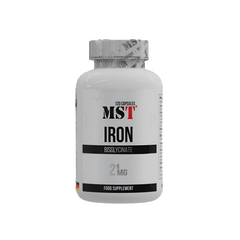
The product
MST® Iron Bisglycinate + Vitamin C
€21,00